


 Hunter Rhodes
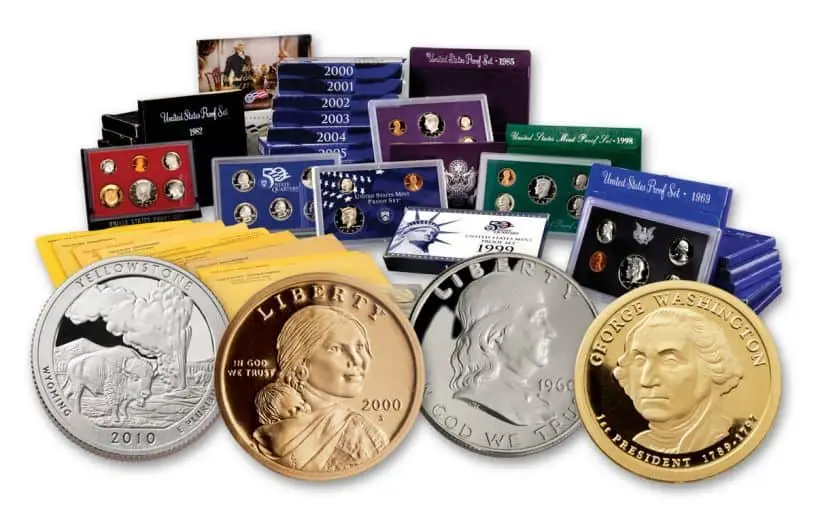
A modest collecting budget can still buy interesting coins and sets. Less fashionable material sometimes offers more enjoyment for the money, but a low price does not automatically make it a strong investment. Consider why the item is inexpensive and whether you would still want it if its resale premium never improves.
The original discussion described dealer inventory conditions in the first half of 2024. Availability and premiums change, so the categories below are research ideas rather than current sale offers.
1. Silver wartime nickels
U.S. wartime nickels using the silver alloy were produced during part of 1942 and through 1945. The composition is 35% silver, 56% copper and 9% manganese. A large mintmark above Monticello on the reverse is a key identifying feature.
Do not assume every 1942 nickel contains silver. Ordinary copper-nickel examples also exist for that year; they are not copper-nickel clad coins. Confirm the actual issue and authenticity before applying a silver value.
These coins contain a relatively small amount of silver apiece and may appeal to collectors or buyers comfortable with lower-purity material. Compare the price per fine troy ounce and obtain a resale indication. A low per-coin price can conceal a less favorable premium or buying spread.
2. Genuine gold coins with cosmetic problems
A scratched, cleaned or otherwise less attractive gold coin may sell for less than a visually desirable example of the same issue. For a buyer focused on metal content, that can merit investigation—provided the item is genuine and the fine-gold weight is understood.
A discount from a collectible price is not necessarily a discount to metal value. Wear, damage, missing material and authentication uncertainty can also affect resale. Lower purity by itself does not guarantee a bargain or make a recognized coin difficult to sell.
Ask what problem has been identified, how the price compares with its fine-gold content and what a dealer would currently pay for the same item. Avoid buying an uncertain piece simply because the seller says it can always be melted.
3. Common U.S. proof sets
Some common proof sets offer several carefully struck coins at an accessible total price. They can be enjoyable as a date collection or gift even when demand is limited. Check completeness, original packaging, haze, spots and the condition of the holders.
Composition varies by year and product. It is incorrect to describe every coin in a pre-1965 proof set as 90% silver, or every regular set beginning in 1968 as entirely base metal. For example, the 1968-S proof Kennedy half dollar contains 40% silver. Cents and nickels require their own specifications.
Modern silver proof sets are separate products from regular proof sets. Verify the exact set rather than relying on a box color or a broad date rule. Particular varieties or exceptional coins can have a different market from an ordinary complete set.
Let the budget serve the collecting goal
Buying a large unwanted assortment solely to receive a discount can create storage and resale work. Choose quantities you can afford and material you understand. A bargain is more useful when it fits the collection you want to build.
Atlanta Gold & Coin Buyers can discuss current availability and prices through our contact page. Ask about the buying side of the market as well as the purchase price before deciding that an unpopular item is undervalued.

About the author
Hunter Rhodes
Owner & Managing Director, Atlanta Gold & Coin
Hunter joined Atlanta Gold & Coin in 2022 and purchased the company at the end of 2024. He has been investing in precious metals since 2010, with gold remaining his favorite metal. While he may never admit it, Hunter has a numismatic collector’s side, especially when it comes to select type coins. Libertads and Engelhard rounds are among his favorites.
Meet our team