


 Hunter Rhodes
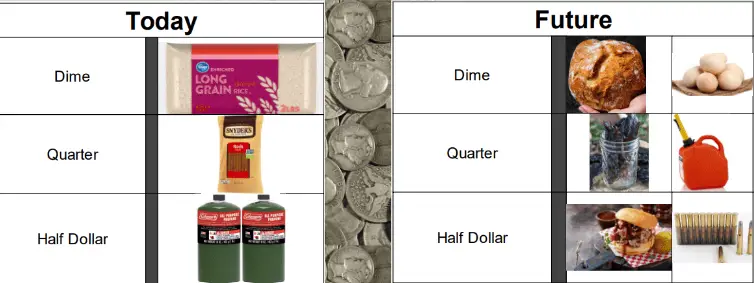
Silver is sometimes purchased with future barter in mind. That is a planning scenario, not a guarantee that a merchant or neighbor will accept coins. A transaction still requires agreement about authenticity, silver content and the value of what is being exchanged.
These five familiar U.S. coin types illustrate the tradeoff between smaller units and simple identification:
- 90% silver dimes. Common twentieth-century issues such as Mercury dimes and Roosevelt dimes dated through 1964 provide relatively small silver units. Wear can reduce their actual weight.
- 90% silver quarters. Common silver Washington quarters dated 1932 through 1964 offer a larger unit. At their original standard weights, two quarters contain the same amount of silver as five comparable 90% silver dimes.
- 90% silver half dollars. Examples include Franklin halves and 1964 Kennedy halves. One such half dollar has the same original standard silver content as two 90% silver quarters. Later Kennedy halves require separate identification because composition changed.
- Original Morgan silver dollars. The 1878–1904 and 1921 issues contain approximately 0.7734 troy ounce of silver at their standard original weight. They should never be represented as containing a full ounce. Collector premiums can make them more expensive than simpler bullion alternatives.
- American Silver Eagles. These contain one fine troy ounce of silver and carry a .999 purity specification. Their stated content simplifies the arithmetic, but the price premium can differ significantly from other silver products.
The figures above concern identified coin types, not every old U.S. coin. For specifications, consult PCGS CoinFacts and the U.S. Mint's bullion information. Heavily worn or damaged coins deserve additional attention when a transaction depends on weight.
Agree on the value before exchanging anything
Face value, silver value and collector value are different measures. A scarce date may be inappropriate for a transaction that recognizes only metal content. A smaller unit can be convenient, but high premiums may make it an expensive way to acquire silver.
Keep transaction and purchase records. IRS guidance on bartering explains that an exchange without cash can still have tax consequences. Coin recognition does not create a tax exemption or obligate someone to accept it.
Contact Atlanta Gold & Coin Buyers to compare identifiable silver products, their current premiums and ordinary resale options before buying for a hypothetical future use.

About the author
Hunter Rhodes
Owner & Managing Director, Atlanta Gold & Coin
Hunter joined Atlanta Gold & Coin in 2022 and purchased the company at the end of 2024. He has been investing in precious metals since 2010, with gold remaining his favorite metal. While he may never admit it, Hunter has a numismatic collector’s side, especially when it comes to select type coins. Libertads and Engelhard rounds are among his favorites.
Meet our team