A Practical Guide to Buying or Selling Morgan Silver Dollars
Morgan silver dollars rank among the most widely collected coins in the United States and internationally. They have long interested both collectors and investors, in part because they feature some of the most recognizable designs produced by the United States Mint. Whether you hoped to sell Morgan silver dollars or add more to your collection, the original article encouraged readers to spend a few minutes reviewing this guide first.
Five mints made these coins during their production history, from 1878 – 1921, with different mintages, types, and varieties along the way. Every Morgan silver dollar contains 90% silver. George T. Morgan created the design.
Values for these coins may start around their melt value and rise to hundreds or even thousands of dollars. That broad range can make them approachable for collectors on modest budgets as well as for advanced collectors. It can be tempting to move immediately into a Morgan dollar purchase or sale, but pausing to weigh several factors before completing a trade can be useful.
At the time of original publication, the article described the following: This article set out practical suggestions and broad guidelines intended to help readers conserve time and money. Its information was meant for new collectors, people who had recently inherited a Morgan silver dollar collection through an estate, and experienced numismatists alike. The discussion began with considerations for purchasing, then moved to considerations for selling silver coins.
Buying and Selling Morgan Silver Dollars
Building a Morgan silver dollar collection can offer both an enjoyable hobby and an investment-oriented pursuit. Still, approaching the process poorly may cost a collector hundreds or even thousands of dollars.
By contrast, disposing of a Morgan dollar (or any US silver dollar) collection can feel overwhelming when research has not been done in advance. The following points were presented as useful ways to improve the likelihood of a satisfactory Morgan silver dollar purchase or sale.
Let the Coin Stand on Its Own
People marketing and selling Morgan silver dollars may work hard to persuade buyers that a coin has a particular grade or value. Although that is unsurprising, the original article advised stepping back before committing to a purchase that could later bring regret.
The original article recommended an objective approach to Morgan dollar purchases and cautioned readers against promotional excitement. Is it actually a better-date coin? Would a third-party grading service assign it a straight grade, or has it been altered? Is the particular coin commonly counterfeited?
Would the coin’s grade materially affect its value?
The article described an in-person inspection as the strongest way to purchase valuable Morgan silver dollars, because it lets a buyer examine the coin directly. If that was not possible, it recommended requesting high-resolution photographs to review the coin’s details and judge whether its grade and advertised price appeared appropriate.
Watch for Misleading Marketing Practices
Atlanta Gold & Coin described honesty and transparency as important dealer practices, and noted concern when collectors were drawn into misleading marketing. Such marketers may, in many instances, direct their efforts toward inexperienced investors or older individuals.
At the time of publication, Atlanta Gold & Coin had recently met an individual who said the company from which he bought coins specifically targeted elderly Christians. This type of practice was described as deeply upsetting.
The article said research was one way readers could reduce the chance of dealing with dishonest companies. At the time of publication, it reported frequently seeing companies try to sell obscure foreign coins with limited mintages while claiming they would become valuable numismatic coins later.
The article cautioned that, when the broader public does not recognize such coins, the market for them may be limited when an owner later wants to sell.

For U.S. coins, the article advised researching whether an asking price aligned with comparable examples. It also emphasized the importance of the TPGS, stating that coins not certified by PCGS or NGC should generally command less because other firms’ grading standards were described as less rigorous.
The original article stated that Early Releases or First Releases designations should not add much to the price, though a First Day of Issue (FDOI) coin could bring a modestly higher amount.
At the time of original publication, the article described the following: In the years before publication, label signatures had become more popular. The article recommended against paying substantially more for a signature label, particularly when the signer had not held a notable role such as U.S. Mint Director, Chief Engraver, or Sculptor.
Some label signers are less well known, and the article suggested their signatures might not gain value at the same pace as a person recognized and respected within the hobby.
Photographs Can Say a Thousand Words
The saying that a picture tells a thousand words also applies to coins. The article stressed, however, that an image must clearly show the coin’s details and should not have been altered through settings or filters.
As an example, the article reported regularly seeing people sell coins described as deep mirror proof like (DMPL), which have a mirror-like background and foreground. Although raw examples exist, Atlanta Gold & Coin stated that, despite purchasing hundreds of thousands of coins annually, it did not encounter them often.
For that reason, the article said caution was warranted when a seller characterized nearly every coin as DMPL and used images that appeared altered to create sharp background-to-foreground contrast. Its basic point was that an unusually perfect-looking coin may not be what it seems, and readers were cautioned about these methods.
In some listings, a seller may describe a coin as a much higher grade than the photographs indicate. If uncertainty remained about a coin’s grade, the original article recommended reviewing this tool from PCGS.
Some coins have also been cleaned, polished, or whizzed. Those alterations can photograph attractively and make a coin appear to grade higher, yet they can ultimately reduce its value. The next section addressed that issue in greater detail.
Where practical, the article identified in-person examination as preferable for high-value coins, especially uncertified pieces. For online purchases, it advised readers at the time of publication to verify that the coins were being sold by a reputable dealer.
Not Everything That Glitters Is Gold
People are naturally attracted to shiny objects, but with Morgan silver dollars, shininess can be a negative sign. It may indicate alteration through cleaning, polishing, or whizzing. As with antiques, buyers generally seek Morgan dollars in original condition, even when they show patina, toning, or tarnish.
Certain types of toning can add value to Morgan silver dollars. Some collectors, for instance, focus exclusively on toned examples. One popular type is known as “rainbow” or “monster rainbow,” extending across the coin, often on both sides, with rich shades of multiple colors.

For context, newly minted Morgan silver dollars originally showed a frosty, snowy-looking surface called mint luster. The article emphasized the importance of distinguishing genuine mint luster from the shine created by cleaning.
As Morgan silver dollars moved through ordinary circulation and handling, their mint luster wore away and the surface took on a more matte-like appearance. A circulated coin therefore should not be expected to retain mint luster.
Cleaned coins that look shiny to the unaided eye commonly trade at levels roughly two grades below comparable unaltered coins. For example, a cleaned almost uncirculated (AU) piece may trade nearer to the value of an unaltered very fine (VF) coin.
Condition Counts — Do Not Settle for Less Than a Coin Is Worth
When the original article was published, it reminded people considering a Morgan silver dollar sale that condition matters, even for a common-date coin. Morgan dollars are graded on a 70-point scale, with 1 representing the lowest condition and 70 a perfect coin.
Apart from the 2021 Modern Commemorative 100th anniversary Morgan silver dollar, no Morgan dollar has received a perfect 70. Only a small number of original Morgan silver dollars earned an MS69 grade, making them exceptionally valuable.
Regarding condition, the article described fine through very fine as a standard-condition range for a Morgan silver dollar. Coins below fine generally trade for less, while pieces graded extremely fine or higher generally trade at premium levels.
Uncirculated coins generally trade at values 50% above standard-condition coins, and sometimes by more. Conversely, coins below fine condition usually trade at a discount from average-condition examples.
A coin can display particular details yet still be less valuable because of several issues, including, without limitation:
- Cleaning
- Polishing
- Whizzing
- Scratches
- Graffiti
- Dents along the rim
- Staining
- Oxidation and heavy toning
At publication, the article stated that selling coins with these conditions generally brought less because they were viewed as off-quality.
Conversely, the original article said buyers of coins with these issues could expect to purchase them at a discount.
Which Mint Produced Your Coin?
A coin’s condition matters when its value is evaluated, but its place of production can matter equally. Five US Mints struck Morgan silver dollars between 1878 and 1904, then resumed production in 1921.
Carson City Mint
Every coin struck at the Carson City mint was made in smaller quantities than common-date issues. The coins produced from 1882 through 1884 had the largest runs there, with mintages exceeding one million pieces apiece.
The Carson City silver dollar with the smallest mintage dates to 1885, whereas the 1889 is considered more valuable because comparatively few examples escaped melting.
Following passage of 270 millionThe Pittman Act of 1918, an estimated Morgan silver dollars were melted. Because so many pieces entered the melting pot, the survival rate for numerous dates remains uncertain.
New Orleans Mint
The New Orleans Mint has a notable past. It began as one of the three original U.S. mints and, at that time, was the sole facility striking both gold and silver coinage. In 1861, Confederate Louisiana forces seized it and used it to strike additional U.S. coins exclusively for the Confederate States of America.
Following the Civil War, the mint closed; it later reopened in 1879 and operated until 1892.
The 1903-O Morgan dollar is another example of a coin with a large original mintage yet limited surviving population. Its reported mintage exceeded 4 million pieces, but the lower survival rate made examples relatively valuable, with prices beginning in the $200 range.
Additional valuable New Orleans issues include coins from 1893 and 1895. Most remaining New Orleans Morgan dollars are generally common-date examples.
Philadelphia Mint
Philadelphia was known for high coin production totals, although several important exceptions exist within the series.
The Philadelphia issue with both the lowest mintage and greatest value is from 1895. Just 880 were struck, making it the rarest and most valuable Morgan silver dollar. Other lower-mintage Philadelphia Morgan dollars date from 1894, 1895, and 1899.
San Francisco Mint
The San Francisco Mint was associated with some of the series’ lowest mintages. In particular, the 1888, 1892, 1893, 1895, 1902, and 1903 were regarded as more valuable issues.
Among San Francisco Morgan silver dollars, the 1893 was the most valuable. Only 100,000 were produced, and values began above $1,000.
Denver Mint
Finally, Denver struck only one Morgan silver dollar issue, in 1921. More than 20 million were made, so it was a common-date coin. Indeed, the 1921 Denver Morgan silver dollar ranked as the third-highest-mintage issue in the Morgan dollar series.
Third-Party Grading Services: The Basics
Companies had provided forms of professional coin grading for some time, but the Third-Party Grading Services, or TPGS, industry effectively started with ANACS in 1979. At the time this article was published, ANACS remained in operation, although NGC and PCGS were the two leading TPGS.
This standing was partly attributed to grading that could be less consistent and less strict. ICG was another recognized, though less widely used, TPGS. In many cases, NGC- and PCGS-certified coins carried higher values than coins certified by ANACS or ICG.
At the time of original publication, the article described the following: For readers curious how the same coin might be graded by each company, the original article pointed to a YouTube video comparing precisely that question.
At the time of original publication, the article described the following: Atlanta Gold & Coin had no affiliation with that YouTube channel, but considered the video an interesting watch.
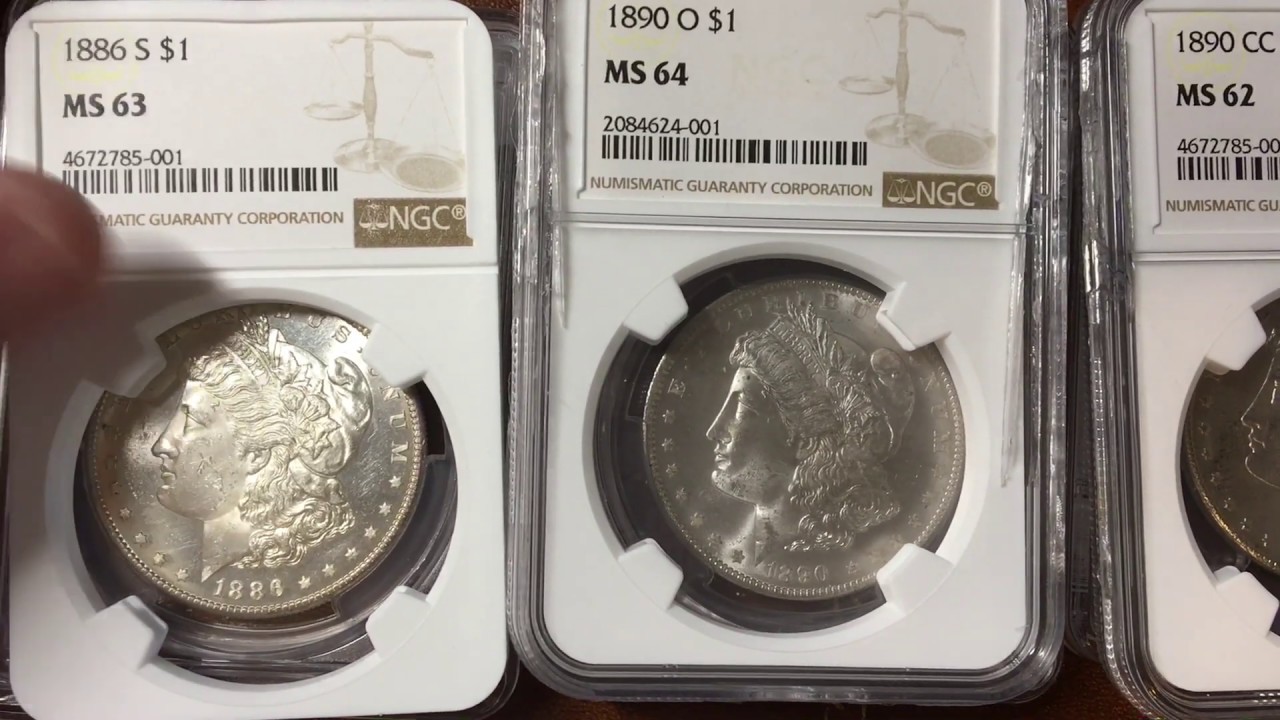
Beyond the four TPGS discussed above, most other grading services were not broadly viewed in the industry as reliable or accurate. In many instances, the degree of overgrading by those companies was described as bordering on criminal.
Atlanta Gold & Coin regularly encountered coins certified by these “third tier” grading services at grades many levels higher than the coins’ actual condition.
Coins that had plainly been cleaned or polished also commonly received straight grades rather than detail grades. At the time of publication, some online auction sites had stopped allowing such coins to be listed for sale, since an inaccurate grade’s inflated value could cost an unsuspecting buyer hundreds or even thousands of dollars.
One further point about TPGS is that they were not necessarily the holy grail many people assumed. At the time of publication, Atlanta Gold & Coin purchased hundreds of thousands of coins annually, yet submitted only a fraction of 1% for authentication, certification, and grading.
The decision requires weighing the submission cost and turnaround time against the additional value a certified coin is expected to have.
Factors worth considering included:
- Cost of submitting coins
- Grading charges
- Processing charges
- Shipping, handling, and insurance charges
- As of May 2022, NGC and PCGS had both said they anticipated 30-90-day delays before a newly certified and graded coin was returned.
More often than not, those costs and delays were difficult to justify for grading a coin.
“Tweeners” Could Be an Expensive Error
A one-grade difference can produce price gaps of hundreds or even thousands of dollars. The largest differences often occur between coins graded almost uncirculated, or AU, and those graded brilliant uncirculated, or BU.
The 1884-s Morgan silver dollar offers a useful example. With a mintage of 3.2 million, it was not a rare coin, but uncirculated examples were difficult to locate. An AU example traded in the $200 range, while a BU variety traded for $5,000 or more.
Less reputable sellers have sometimes listed these coins on auction sites as BU even when their condition was no better than AU. When this article was originally published, readers seeking a high-value coin to complete a gap in a collection were advised to consider a PCGS- or NGC-certified example. Certified coins could cost more, but an incorrectly graded raw coin could prove substantially more expensive.
Large price differences do not occur only between AU and BU grades.
Examples of coins whose extremely fine, or XF, and almost uncirculated, or AU, grades differed by $500 or more included:
- 1879-CC
- 1889-CC
- 1892-S
- 1893-CC
- 1895-S
- 1903-S
The original article stated that PCGS- or NGC-certified examples provided assurance that the assigned grade was accurate.
Without certification, the original article noted that a buyer accepted greater risk. Readers who chose that route were advised, at publication, to confirm that the seller offered a generous return policy.
Disregard Comments on 2×2 Holders
As noted earlier, readers should generally disregard remarks written on holders for raw coins. Those statements may have been a marketing device intended to justify prices above market levels. A coin should stand on its own merits, rather than on flashy language supplied by a dealer or seller.
When this article was originally published, Atlanta Gold & Coin had recently purchased a large collection containing many such coins. The seller had been so inventive that the comments were rarely repeated. After the coins were examined in person, it was apparent that their features and grades had been overstated.
Marketing can be influential, but when this article was originally published, readers considering a coin purchase were encouraged not to let a seller’s comments determine whether it was a good buy.

That guidance did not apply to a seller supplying a coin description, which sellers should provide. For new buyers and experienced collectors alike, a detailed and accurate description was especially helpful.
To Certify or Not Certify – That Is the Question
The final issue addressed here is whether coins should be certified. Although the subject appeared throughout the article, this section offered guidelines for deciding when submission might make sense and when it likely would not.
At the time of publication, the expense and turnaround period usually did not justify having Morgan silver dollars certified or professionally graded. Atlanta Gold & Coin reported purchasing thousands of Morgan silver dollars annually and, apart from bulk submissions of common-date uncirculated coins, submitting only a small handful for certification each year.
The reasoning was that certification costs often did not produce meaningfully higher prices. The article’s general rule of thumb was that, unless certification increased value by at least $100 after all related expenses, certification was probably not worthwhile. According to the original article, that applied to nearly every Morgan silver dollar.
There were exceptions, however. The original article recommended certifying an 1895 Morgan silver dollar without a mint mark because it was described as the most valuable Morgan dollar and frequently counterfeited. Only 880 of these coins were known, making the issue a rarity.
Another valuable coin that was generally considered worth certifying was an 1893-s Morgan dollar. Unless it was in poor condition, the article indicated that professional grading would likely allow the owner to recover the related expense.
The article also recommended certification for coins highlighted in its “Tweeners” section. If an owner believed a coin would receive the higher of the two discussed grades, the cost was considered worthwhile because the resulting value could be $500 higher or more.
One final point on certification: if an owner chose that route, the article advised against cutting corners or reducing costs by submitting coins to a second- or third-tier grading company.
Many coin dealers disregarded the grades stated on holders from these less-regarded companies. Some were known to crack coins out of those holders and sell them as raw coins.
Summary
In summary, this article considered several factors relevant to buying or selling Morgan silver dollars. At publication, buyers were advised to confirm that coins matched their descriptions, avoid marketing tactics, and purchase certified coins only from respected TPGS. Sellers were reminded that Morgan silver dollars did not all have equal value.
Better-condition, key date or rare coins and certified coins were expected to bring higher values.
The original article expressed the hope that these points would improve readers’ Morgan silver dollar buying or selling experience. At the time of publication, readers in the market to buy or sell were told that coin specialists at Atlanta Gold & Coin Buyers could assist.
At publication, Atlanta Gold & Coin described its team as knowledgeable in the field and able to help guide readers through the process of buying or selling Morgan silver dollars.
When this article was originally published, people selling silver dollars were invited to seek transparent assistance intended to help them maximize the value of a Morgan silver dollar collection. Readers looking to buy Morgan silver dollars at a reasonable price were also told that Atlanta Gold & Coin could help.
At the time of publication, readers were invited to review the Current Inventory or What We Pay for coins and bullion, then give Atlanta Gold & Coin a call or submit an appointment request form to begin the buying or selling process with Atlanta Gold & Coin Buyers.