
How to Tell Whether It Was the Right Time to Buy Silver Coins and Bullion
Over the years, Atlanta Gold & Coin had answered thousands of questions from people buying silver coins for the first time. When this article was originally published, one question appeared more often than almost any other: “When is it a good time to buy silver coins and bullion?” It was a worthwhile question, and the original article offered further discussion and analysis.
Wanting to place money in the appropriate assets at the appropriate moment is a natural impulse. Still, no one can reliably identify the exact bottom or exact top of any market. People who say they can pinpoint either point are generally regarded as overly confident or inexperienced. The best we can all hope for is to make a sound investment at a fair price, with the hope of receiving a reasonable return over the following years.
Another way to view it is that silver coins and bullion share some characteristics with other investments while differing in other respects. The original article did not attempt to set price targets for anyone’s investing. Instead, it outlined considerations intended to help readers feel more confident that they were making a sensible decision at a suitable time.
When You Were Prepared to Diversify
A familiar saying holds that perfection is the enemy of a good plan.
People sometimes become stuck in analysis, and prospective investors can fall into that pattern as well. They may scrutinize every detail of investing in silver coins and bullion. As one example, Atlanta Gold & Coin had begun conversations with a prospective customer several months earlier, when this article was published.
At publication, According to the original article, his decision not to act then had left him with fewer choices and was expected to cost thousands of additional dollars as demand and the prices of coins and bullion continued increasing.
The original article suggested that one suitable time to invest in silver was when a reader was ready to diversify a portfolio. Research on silver indicated that it had low correlation with most major asset classes, including stocks, bonds, real estate, and cash. At times that relationship was negative: when one of those asset classes declined in price, silver tended to rise, and the reverse could also occur.
If a reader already had an inflation-hedged investment portfolio, the original article considered that a positive position. That could also mean the timing of an additional silver investment mattered less.
By contrast, a portfolio sensitive to interest-rate changes and moving alongside the strength of the dollar (or lack thereof) could make the question of timing more pressing, according to the original article.
After reading about silver and its potential upside, a reader might have felt inclined to liquidate an entire portfolio and place all investment proceeds into physical silver immediately. Although that could potentially work out well over the long term, the original article described a more cautious approach: begin gradually, then determine whether the metal’s volatility feels manageable. At publication, many investment advisors recommended a 5% – 20% allocation to precious metals, which the article presented as a possible starting point.
When Silver Was “On Sale”
Remember BOGO? A bargain appealed to nearly everyone.
The original author described getting perhaps more enjoyment than he should from locating a good deal. He also said he enjoyed trips to Mexico and negotiating prices there. Sometimes he wondered whether the effort justified the savings, but in many instances the hunt itself provided the main appeal.
For readers who were undecided when the article appeared, Atlanta Gold & Coin suggested considering buying silver coins or bullion when it’s “on sale”. What did “on sale?” mean? Put simply, it meant the futures-market spot price per ounce was lower than it had been, or was discounted compared with its historical average.
How could someone tell when silver was on sale?
A look at silver’s history showed that its price reached peaks of $50 in 1980 and 2011. In 1980, inflation was in double digits, which the original article compared with conditions at publication. In 2011, the Federal Reserve’s balance sheet rose sharply, starting at $800 billion and climbing to $2.7 trillion when silver peaked in April 2011—an increase of more than three times.

At the time this article was originally published, we’re experiencing high inflation rates, alongside a large central-bank balance sheet, annual deficits of $1 trillion or more extending into the future, and national debt nearing $32 trillion. The original article stated that these conditions should support silver’s future price.
Mining costs were another consideration. When the article was originally published, the all-in sustaining costs of silver miners is roughly $15 per ounce. The original article compared that with a then-current spot price of roughly $20 per ounce, meaning the spot price at that time was near mining costs.
Few investments, the original article observed, let someone invest near the producer’s cost. It also suggested that mining expenses would likely rise from that point because equipment, labor, and energy costs were increasing.
Because average mining costs were near silver’s price and the futures-market silver price was approximately 60% below its all-time high, the original article described physical silver as a reasonable investment to consider at publication.
One consideration, however, was that silver’s spot price had separated from the physical-silver price at the beginning of Covid and, at publication, had not corrected. The original article said this had left premiums on physical silver substantially higher than they had been previously.
The original article next turned to the subject of premiums.
When Silver Coin Premiums Were Low
In an ideal setting, the best time to purchase silver coins and bullion would be when prices were low, supply was plentiful, and premiums on physical silver are nominal. The original article noted that supply and demand rarely allow those circumstances to occur together, a subject addressed in its following section.
Before going further, the original article said it was important to define premiums and explain how they related to buying silver. Premiums were generally the added cost above silver’s spot price that compensated miners, producers, fabricators, and coin dealers for their work and overhead. They were also referred to as commissions or brokerage fees.
At publication, Returning to the earlier discussion, the article explained that premiums generally reached their highest levels when demand for silver was substantial and available inventory was limited. Silver’s price contributed to that pattern, but the dollar’s strength, central-bank policy, GDP, unemployment, and geopolitical concerns were described as additional influences.

The large question at publication was, what would make premiums fall or at least moderate? As noted earlier, premiums generally moved with the availability of inventory. As silver prices rose, more supply could enter the market. Although silver had recently been in strong hands when the article was published, few people would decline an opportunity to take a worthwhile profit on their investments.
At publication, Conversely, few investors were willing or able to sell at a loss, helping explain why little inventory came to market after silver’s price declined. The original article concluded that the practical issue was balancing the price of physical silver against its premiums.
For readers who were waiting for premiums to fall sharply, the original article said that was unlikely unless or until silver’s spot price increased substantially, which could require time. If silver’s price rose while premiums declined, would someone actually save money? As an example, it stated that a 10 oz silver bar with a spot price of 20.64 per ounce and a standard $4.50 premium per ounce would cost $251.40.
At publication, The article then used a second hypothetical: if prices rose and premiums declined, the same case would involve a theoretical spot price of $28.64 per ounce and a modest $1.99 premium per ounce. Despite the lower premium, the 10 oz bar would still cost $306.30. That represented a difference of $54.90. The original article cautioned readers not to let premium concerns prevent a purchase while silver’s price was low.
At publication, That conclusion, of course, assumed inventory was available when an investor decided to proceed.
When Supply Was Available
One major influence on premiums was the inventory available in the marketplace. When this article was originally published, that inventory was among the lowest seen in years. In fact, COMEX just announced that 50% of silver eligible for delivery doesn’t exist. Readers familiar with COMEX knew it as the primary futures and options market for metals trading, including gold and silver; its name abbreviated The Commodity Exchange Inc. Atlanta Gold & Coin had previously mentioned that junk silver was once very difficult to give away. At publication, if someone could find it, these coins carried some of the highest premiums ever.
At the time of publication, heightened demand meant that very little silver coinage or bullion could be found in the marketplace. The original article reported that most large online coin dealers had no stock and faced delays of as much as two months. Other dealers occasionally listed silver coins and bullion as in stock, but those newly announced supplies generally sold through immediately.
At publication, As noted earlier in the original article, silver’s spot price did not reflect the demand then being seen for physical metal. That disconnect had recently produced a substantial rush into physical silver. The article also cited the West Point Mint’s decision to stop producing American Silver Eagles for the rest of that year. In the article’s view, that production pause reduced supply and led to higher premiums.
Like 90% silver coins, Silver Eagle premiums were then trading close to record highs.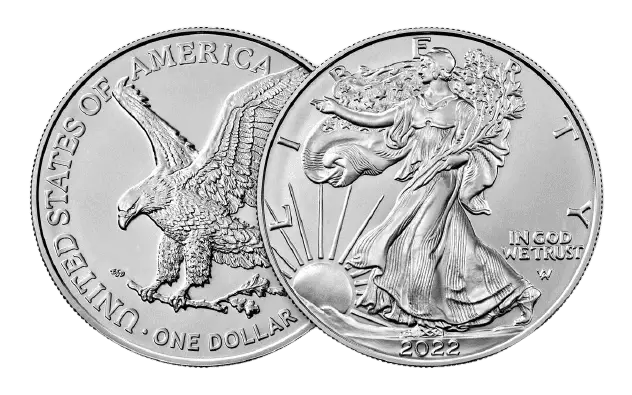
Given the economic conditions described at the time of publication, along with the fact that little to no silver coin and bullion inventory exists, the original article suggested considering silver when supply could be located. It also cautioned against paying an unreasonable amount simply because material was available. If a price appeared reasonable in light of those historical conditions, the article suggested that a purchaser might decide to move ahead.
During roughly the preceding thirteen years, Atlanta Gold & Coin had seen several periods in which no supply was available at any price. The market had, in practical terms, run out of silver. A buyer might have located a small number of obscure pieces or items with lower purity, but beyond those exceptions, coin dealers nationwide were reported as completely out of stock.
Could that happen again? The article considered it quite possible.
At publication, The article especially pointed to an unnamed investor who had recently made a $50 million order and reportedly intended to complete several additional multimillion-dollar purchases. It reasoned that the items she acquired could be removed from the marketplace permanently, or at minimum might not reappear for decades. Under that historical scenario, the limited inventory then available was not expected to remain available for long.
This discussion of supply was not intended to create alarm or push readers into an immediate decision. At the time of publication, the article was simply presenting information about marketplace supply and patterns Atlanta Gold & Coin had observed over its years in the industry.
Summary
The question that originally prompted this discussion was, “When is it a good time to buy silver coins and bullion.” The article aimed to address it by setting out factors for readers to weigh. For someone seeking to diversify an investment portfolio, particularly without investments intended to hedge inflation, the original article suggested considering a decision sooner rather than later.
It also recommended purchasing silver when it was “on sale.”
Although the article did not present this as a complete list, it suggested comparing silver’s then-current spot price with mining costs and prior all-time highs. That comparison, it explained, could help a reader judge whether silver appeared to be fairly priced at that time.
The discussion then turned to premiums.
In principle, the article described low premiums as the preferable time to buy. It also noted that premiums often reached their lowest levels when silver’s spot price was high, making it less useful to wait only for premiums to fall. When the article was published, it recommended acting sooner rather than later if physical silver coins or bullion could be found at reasonable premiums while spot silver was depressed.
Finally, the article advised considering inventory or supply available at publication when deciding when to buy.
At the time of publication, supply was limited. The article noted that silver could sometimes be unavailable at any price, and suggested that readers then seeking to add silver to a portfolio might proceed if they could do so at a reasonable cost.
At the time of publication, the silver-coin experts at Atlanta Gold & Coin Buyers stated that they followed the market closely and were available to answer questions concerning the purchase of silver coins and bullion.
At publication, Give us a call today at 678-515-5763 was an invitation for readers to seek expert advice and customer service; Atlanta Gold & Coin said it welcomed the opportunity to earn their business.
Happy treasure hunting!

