How Regular Gold Coin Buying Could Build a Million-Dollar Portfolio
Atlanta Gold & Coin had a young woman customer in her mid-20s whose long-range gold-investing objective was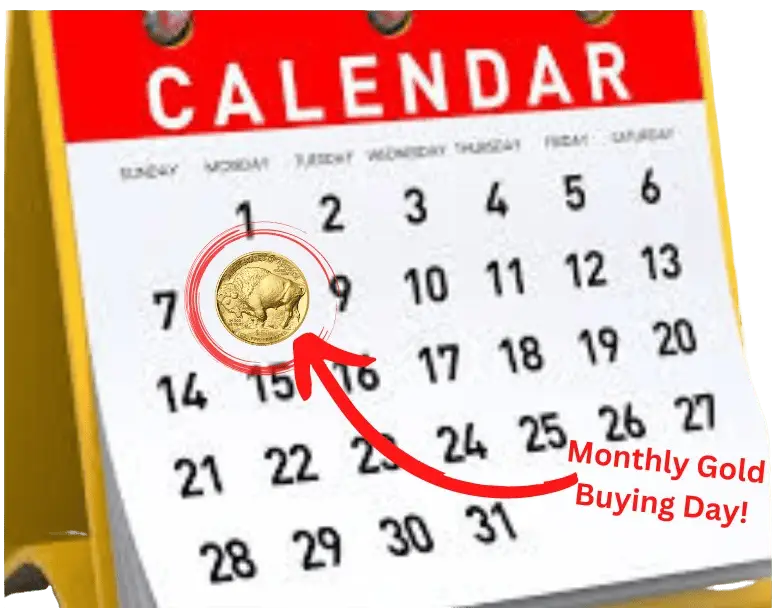 purchasing one or two 1 oz gold coins each month until retirement. At the time, Atlanta Gold & Coin simply noted that she appeared to have a sensible approach.
What Atlanta Gold & Coin had not initially appreciated was that this steady effort could put her in a very strong financial position by her early 60s and, under the article’s assumptions, potentially let her retire as a millionaire.
That illustration assumes gold merely increases at the pace of price of inflation.
The original article suggested that gold will outperform inflation in the years to come, perhaps by a meaningful margin, for reasons discussed later. If gold performed as the article anticipated, it stated that she might retire comfortably as a multi-millionaire.
Retirement can be appealing, and retirement with millionaire-level assets can sound more appealing still. This article considered the monthly financial commitment she—or another reader—might have needed to pursue that reachable objective. It then reviewed factors the article expected could lift future gold prices beyond expectations, and how a straightforward, disciplined financial approach could provide greater comfort during “golden” years.
https://www.usdebtclock.org/index.html
The Gold-Coin Strategy
As described earlier, the customer’s simple, defined objective was to buy one or two 1 oz gold coins every month. She generally favored American Gold Eagles, American Gold Buffaloes, and Canadian Gold Maple Leaf coins, although the article noted that another coin could also serve the purpose.
To avoid placing excessive strain on her budget, the example assumed she would acquire an average of 1.5 coins monthly, or 18 annually.
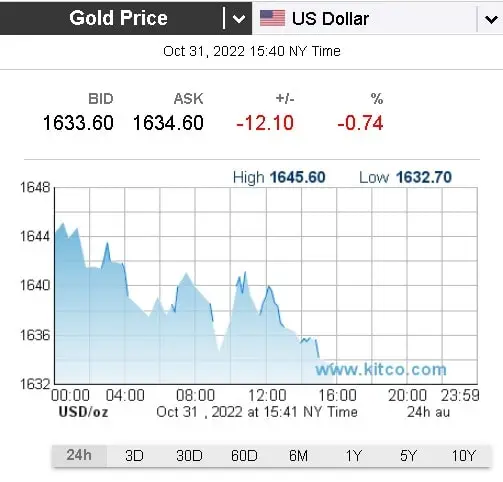
Gold-coin purchases include premiums, so the illustration used $100 as the premium—the amount above gold’s spot price at which coins could be bought. When this article was originally published, it reported a gold spot price of approximately $1,700 per ounce.
Using those assumptions, the individual’s average monthly investment would be $2,700 ($1,800 x 1.5). The article acknowledged that this was a meaningful commitment, while suggesting it could be manageable for many people who reduced discretionary spending and lived below their means. For a budget where that amount was too demanding, it suggested reducing the plan to one coin monthly, nearer to $1,800.
As the article explained, the plan’s appeal lay in its simplicity. At publication, readers were invited to contact Atlanta Gold & Coin to arrange an appointment, buy the coin, put it away for storage, and repeat the purchase when the next month arrived. Once someone committed to the approach, the article characterized the process as quite straightforward.
Dollar-Cost Averaging
Financial professionals often discuss dollar-cost averaging as an investing principle. With a fixed monthly amount, it can result in purchasing more of an asset when prices decline while naturally limiting the quantity purchased when prices rise. The article used that concept to frame its recurring coin-purchase example.
Buying an average of one and a half gold coins each month follows a similar idea. Although the total dollars spent would change from month to month, regular purchases could help establish a reasonable cost basis. For example, if gold rose by $100 the following month, the investment outlay would be closer to $2,850 ($1,900 x 1.5).
At publication, Gold prices also tend to retreat at times. In the article’s example, the next month could bring prices $200 below their then-recent high of $1,800. At a spot price of $1,600, that would permit buying 1.5 coins for $2,550. Each example also included a $100 premium on every 1 oz coin.
Averaging those two sample purchases produces a monthly basis of $2,700. The article cautioned that results would not always unfold precisely as shown, but used the example to demonstrate how consistent monthly buying could lower a buyer’s basis.
Physical gold coins present a complication: their price moves every day. As a result, a buyer would not invest an identical dollar amount monthly in the same way they might through a conventional plan such as a 401k.

That approach requires some room in a monthly budget, so funds are available when gold coins cost somewhat more than expected.
Gold and Gold-Coin Pricing
As noted above, when the article was originally published, it reported gold’s spot price at roughly $1,700. The article described that as below levels seen in the preceding months and couple of years. Its price chart showed gold reaching $2,075 in March 2022 following the Russia-Ukraine conflict.
When this article was originally published, it stated that gold prices were close to a three-year low.
Changing gold prices can create additional investment choices and do not necessarily require buying exactly the same quantity of gold every month, regardless of price.
At publication, The article emphasized continuing to build precious-metals holdings while working toward the longer-term objective of 12 – 18 coins each year.
At the time of publication, Atlanta Gold & Coin reported receiving calls from customers it had not heard from in several years. The article described them as informed investors who thought gold might be near a low and who expected it could rise substantially for reasons the article was about to examine.
When gold was “on sale,” the article said this could create notable investment opportunities. It suggested that a buyer might free funds by selling unused “toys,” liquidating another investment and taking profits, using gifts from relatives, or applying some or most quarterly or annual bonuses to buy discounted gold coins.
Still, the article offered one caution…
A sharp rise in gold prices can lead someone to pause or suspend an investment plan. The article said scaling back coin purchases in months with substantially higher prices could be understandable, but argued against abandoning the strategy entirely. Its reasoning was that the forces moderating prices could eventually shift, producing higher sustained prices and new all-time highs.
Why the Article Expected Gold Prices to Rise
If gold merely matched inflation, the article reasoned, a monthly purchasing plan could leave a buyer with a useful nest egg at retirement. It also assumed the buyer began young and maintained the plan with discipline over time.
If prices rose faster than inflation, the article said, multi-millionaire status might be possible. It considered gold outpacing inflation over the following decades likely, though not certain. The original article then gave several reasons for that view.
- When this article was originally published, it reported the Consumer Price Index, commonly called the inflation rate, as 8.3%. Although down from the peak rate of 9.1% in June 2022, the article said it remained near a 40-year high and was materially affecting most Americans’ budgets.
- The article noted not only inflation at “inflated rates,” but also a Federal Reserve balance sheet near $9 trillion, then an all-time high. It said the balance sheet had doubled during the Covid crisis. It additionally reported national debt of $31 trillion and annual deficits above $1 trillion, with projected deficits extending far ahead.
- The article identified dollar strength relative to other currencies as a principal reason gold had not risen further. At publication, it suggested the dollar index might have recently peaked at 115, implying downside risk for the dollar and upside potential for gold. It also said the investment community expected the Fed to defeat inflation, an outcome the article considered unlikely.
- At publication, The article viewed the monetary and fiscal conditions it described as harmful overall to the economy and Americans’ well-being, while potentially favorable for gold prices. It stated that gold often performs well amid high inflation, dollar-value declines, economic uncertainty, unstable financial markets, elevated geopolitical concerns, and threats of war—conditions it considered likely or certain.
At publication, readers seeking more detail about influences on gold and silver prices were invited to read this article.
How far might gold rise compared with inflation?
Atlanta Gold & Coin could not know the answer with certainty. The article considered an estimate of twice inflation reasonable, but chose a more conservative benchmark of 1.5 times the inflation rate.
This potential outperformance would probably occur unevenly, meaning double-digit gains could appear in some stretches, followed by periods when results were flat or even modestly lagged.
The Nest Egg
Returning to the original example, someone beginning at age 25 and acquiring an average of 1.5 ounces of gold each month would hold 18 ounces at year-end. For a person targeting retirement at 65, that pattern would result in 720 ounces of accumulated gold, provided the saving process began at age 25.
At the time this article was published, gold’s spot price was roughly $1,700, placing that nest egg at $1,224,000 in then-current dollars.
The original article compared this outcome with the average American retirement amount of approximately $141,000 in savings and characterized it as far ahead of a typical retiree. It also noted that some people may have counted on pension income or Social Security benefits to help cover the difference.
At publication, Many financial advisors continued to recommend a 4% annual withdrawal rate—meaning the amount that could be taken each year as “salary” from retirement savings over the course of retirement.
For a portfolio containing about 720 ounces of gold, that illustration equated to withdrawals of approximately $50,000 annually, an amount the article said could support most people in their later retirement years.
The article then assumed gold would exceed inflation by 1.5 times during the investment period. Under that assumption, the projected nest egg rose from $1,224,000 to $1,836,000!
Using the same 4% withdrawal rate again, the example projected annual proceeds of $73,440. The original article suggested that, alongside Social Security benefits, this could produce a very comfortable retirement.
The original example then extended the calculation further.
If gold were assumed to outpace inflation by two times, the article projected $2,448,000 by age 65. Applying that same withdrawal rate, it estimated annual proceeds of roughly $98,000 from gold alone.
The article concluded that this scenario would leave substantial discretionary income in retirement, with little apparent risk of exhausting savings during those years.
Summary
In closing, the original article described the investment approach one customer was using and why it portrayed her as preparing well for retirement. It stated that steady monthly purchases over many decades could add up to hundreds of ounces of gold, but only with disciplined investing. It also argued that gold was more appealing at lower prices, and that when gold was “on sale,” investors might consider freeing funds from other sources to purchase additional gold.
The article also discussed what it described as the nation’s fiscal and monetary conditions at publication. It said those conditions left much to be desired and identified major problems it expected could eventually become unavoidable. In its view, these issues were unfavorable for the economy and for most Americans’ standard of living, while being supportive of precious metals, particularly gold.
The article argued that even if gold only matched inflation, starting early and investing consistently could produce a million dollars by retirement.
It further presented gold outperforming inflation as the more likely case, suggesting that this could make an investor a multimillionaire by the time retirement began.
At the time of publication, Atlanta Gold & Coin Buyers reported helping customers pursue financial goals for years. The business stated that it dealt in many kinds of gold coins, including bullion and numismatic material, and could recommend options suited to individual needs.
At publication, readers were invited to call 404-236-9744 to begin a gold-coin investment strategy.
Happy Treasure Hunting!