


 Hunter Rhodes
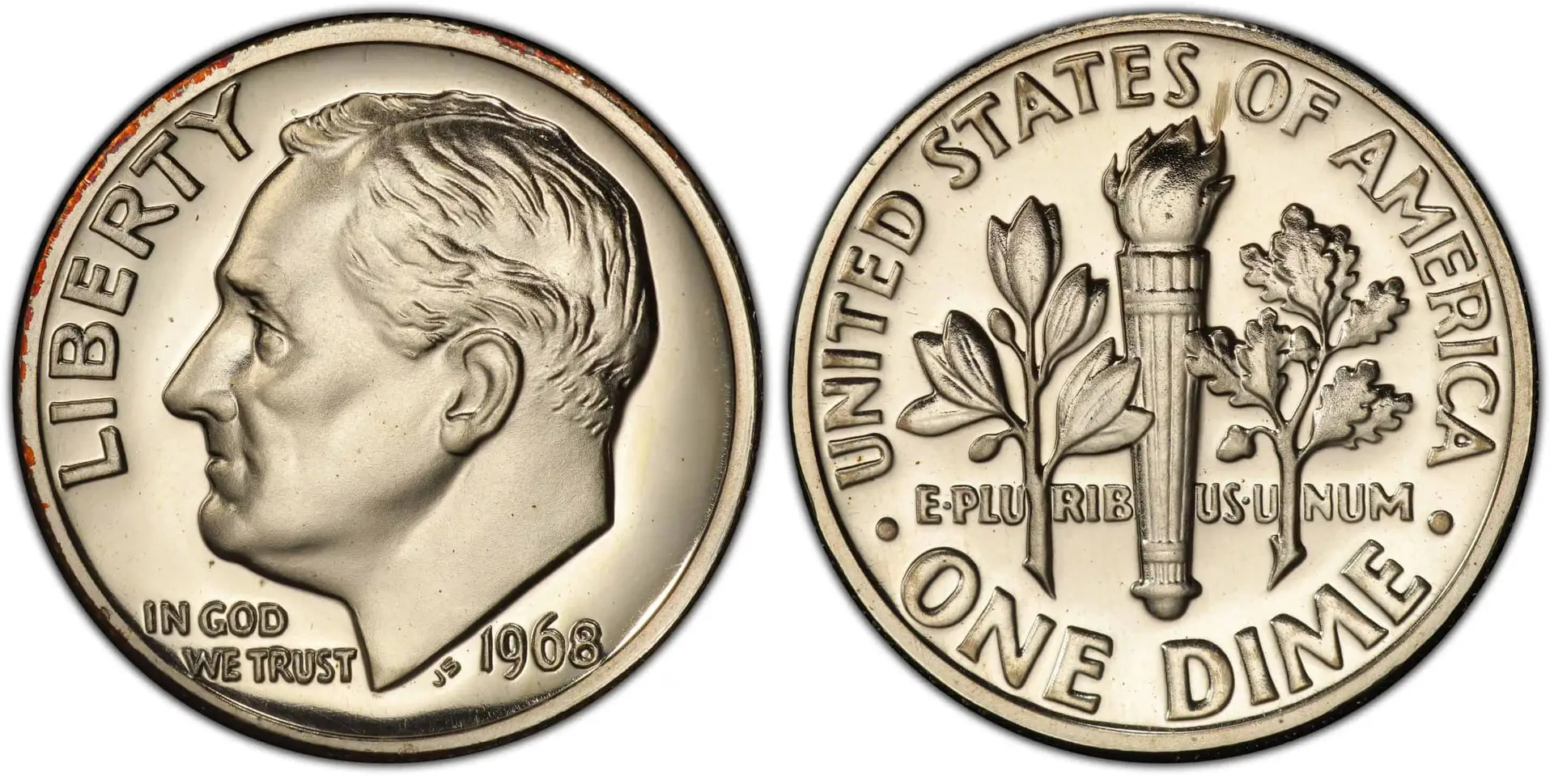
A coin without an S mint mark is not automatically a No S error. The important question is whether that particular coin was supposed to have an S. Millions of ordinary U.S. coins were issued without any mint mark at all.
Identify the issue before judging the missing mark
Mint marks help identify a coin's production facility, but the practice has changed over time. The U.S. Mint's history of mint marks explains that Philadelphia long issued coins without a mark and that circulating coins dated 1965 through 1967 carried no mint marks.
In 1968, production of the regular proof sets moved to San Francisco, with an S mint mark used on those proof coins. A documented omission on a proof that should bear that mark is different from its normal absence on a circulation issue.
The 1975 dime illustrates the distinction
The 1975 No S Roosevelt dime documented by PCGS is a proof coin. PCGS distinguishes the rare proof from the hundreds of millions of ordinary 1975 Philadelphia dimes made for circulation without a mint mark.
A typical 1975 dime found in pocket change does not become that rarity because the area above the date lacks a letter. You must first establish its proof manufacture and then authenticate the specific omission.
Proof is a method of manufacture
A shiny coin is not necessarily a proof, and an uncirculated mint set is not the same product as a proof set. Look at the coin's surfaces, detail and documented issue characteristics rather than relying on one visual impression.
Original proof-set packaging can provide useful context, so preserve it. However, a genuine proof can be removed from its original set, and packaging by itself does not authenticate a coin placed inside it. A loose coin is not automatically disqualified; it simply requires evidence that establishes what it is.
Check a possible example carefully
- Record the denomination and date.
- Determine whether the coin is a proof or a regular circulation strike.
- Confirm whether an S was expected for that exact issue.
- Compare the suspected error with a recognized reference.
- Seek professional authentication if the evidence supports further review.
Do not scratch, polish or otherwise alter the mint-mark area. Wear or damage can obscure features, and attempts to improve the appearance can make examination more difficult.
Keep price expectations tied to the actual coin
A headline auction result refers to a specific authenticated specimen in a particular condition. It is not a value for every unmarked coin with the same date. Even genuine varieties require an assessment of condition and current demand.
Contact Atlanta Gold & Coin Buyers with clear photographs and any original packaging if you need help determining an appropriate next step. Identifying the issue comes before assigning a rare-error value.

About the author
Hunter Rhodes
Owner & Managing Director, Atlanta Gold & Coin
Hunter joined Atlanta Gold & Coin in 2022 and purchased the company at the end of 2024. He has been investing in precious metals since 2010, with gold remaining his favorite metal. While he may never admit it, Hunter has a numismatic collector’s side, especially when it comes to select type coins. Libertads and Engelhard rounds are among his favorites.
Meet our team