


 Hunter Rhodes
Selling a coin collection starts with helping a prospective buyer understand what you have. You do not need to become a professional grader first. A clear overview, useful photographs and an explanation of your goal usually provide a better starting point than an unsupported total value.
A dealer's interest will depend on the types of coins, its customers, available funds and current inventory. If one dealer declines, that does not necessarily mean the collection lacks value. It may need a different specialist or a different method of sale.
Preserve the collection before organizing it
Keep coins in their existing holders where practical and retain certificates, labels, invoices and notes. Do not polish coins to make them look more attractive. Cleaning can damage surfaces and reduce collector appeal; the U.S. Mint's care guidance explains basic protective handling.
Separate obviously different groups without dismantling meaningful sets. For example, distinguish bullion bars, certified coins, albums, modern mint products and loose circulation coins. An original set or group with documentation may deserve evaluation together before it is broken apart.
If you are acting for an estate or another owner, establish your authority to sell. A family agreement about value or distribution may need to be resolved before a dealer transaction. Keep the ownership decision separate from the dealer's role in assessing and offering to buy the items.
Build an inventory suited to the collection
Start with the category, approximate quantity and any clearly visible identifying details. For bullion, include metal, stated weight, purity and manufacturer. For a certified coin, record the service, grade and certification number. For individual collectible coins, the date, denomination and mintmark are useful.
A detailed spreadsheet can be valuable, especially for an organized collection. It does not need to be discarded because every entry may not require specialist attention. Add an overview so the dealer can quickly identify the parts relevant to its business, and distinguish confirmed information from your own estimates.
If you do not recognize an item, say so. A clear photograph and the visible wording are often more helpful than a confident but uncertain identification. You can refine the inventory after an initial discussion.
Photograph the information a buyer needs
Take a group photograph to show the collection's scope, then closer images of representative items and anything that appears unusual. Include both sides of individual coins and the complete label of a certified holder. Use clear lighting without filters that alter color or conceal surface details.
Avoid exposing unrelated personal records, home-security details or the location of stored valuables. Send images through the dealer's verified contact method. If the collection is large, ask which groups need closer photographs instead of sending hundreds of files without organization.
Explain whether you want an offer or an appraisal
A purchase offer answers what a buyer will pay under specified conditions. An appraisal addresses a defined valuation purpose, date and scope, and may involve a written report and a fee. Insurance, estate administration and an immediate sale do not necessarily call for the same document.
Tell the dealer whether you intend to sell, are comparing offers or need a formal valuation. It is reasonable to investigate options before committing. Clear expectations allow the business to explain availability, fees and the next step without either side assuming a transaction has already been agreed.
For our appraisal process, review Atlanta Gold & Coin Buyers' appraisal information and confirm the current terms for your collection. Do not assume every evaluation is free or that every fee automatically applies toward a future transaction.
Use online research as context
Online guides and identification apps can help you learn terminology and locate possible matches. They do not authenticate a coin or establish its condition from a limited photograph. A price for a rare variety or exceptional certified grade may not apply to an ordinary circulated example.
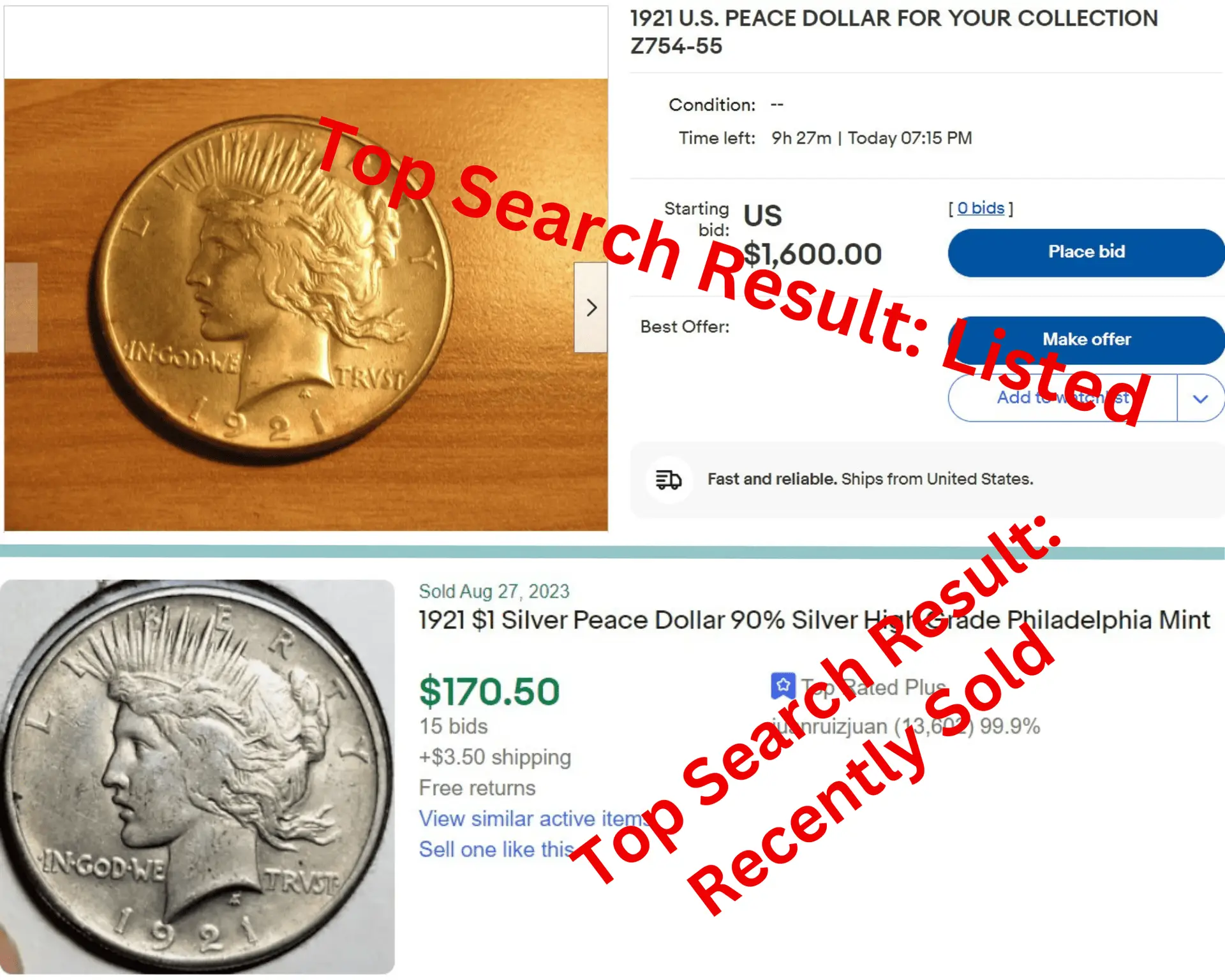
Keep your research notes, but label their source and assumptions. Separate asking prices from completed sales. For auction results, check whether the figure includes the buyer's premium and whether the coin matches your date, mintmark, grade, variety and surface condition.
A retail guide value is also different from a dealer bid. A buyer needs to allow for resale costs, time, market movement and a business margin. You can ask for an explanation of those differences and compare offers without accepting either the guide or the first bid as the only valid number.
Find a buyer whose market matches the coins
Some dealers emphasize bullion; others specialize in rare U.S. coins, ancient coins, world coins or particular series. A mixed collection may benefit from more than one evaluation. Ask whether the business handles the categories you have before arranging transportation or an appointment.
If a dealer declines, ask whether the issue is product type, quantity, scheduling or marketability. It may be able to suggest a more suitable route. A courteous refusal is not a grading opinion, and you remain free to obtain another assessment.
For an item believed to be especially valuable, consider whether specialist authentication, grading or an auction consultation would change the sale strategy. Weigh those services against their costs and timing. Not every ordinary coin benefits from paid certification.
Compare the net result and complete the paperwork
When offers arrive, compare the same scope of items and account for fees, shipping, payment timing and any conditions. Determine whether an offer is firm or still subject to in-person inspection. If part of the collection is excluded, have that portion identified clearly.
Keep a receipt showing what was sold, the agreed amount and the payment method. Retain acquisition or estate records for any later tax or accounting questions. Do not rely on memory to reconstruct a large mixed transaction.
Atlanta Gold & Coin Buyers can help determine whether your collection fits our current buying interests and explain the available next steps. Contact us with an overview and photographs. Good preparation supports a clear, respectful transaction while leaving you in control of the decision to sell.

About the author
Hunter Rhodes
Owner & Managing Director, Atlanta Gold & Coin
Hunter joined Atlanta Gold & Coin in 2022 and purchased the company at the end of 2024. He has been investing in precious metals since 2010, with gold remaining his favorite metal. While he may never admit it, Hunter has a numismatic collector’s side, especially when it comes to select type coins. Libertads and Engelhard rounds are among his favorites.
Meet our team