


 Hunter Rhodes
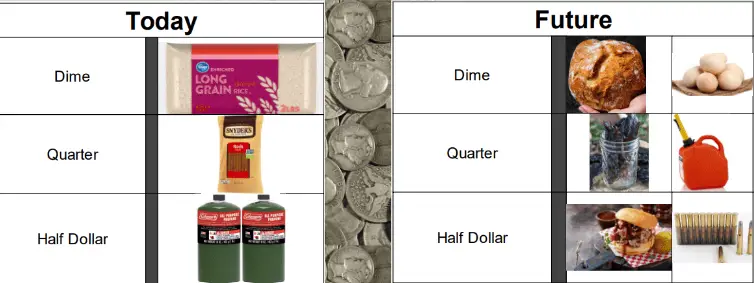
Gold or silver can be exchanged for goods when both parties agree on the item and its value. That is a voluntary transaction, not a guarantee that a shop or neighbor will accept precious metals during an emergency. Before buying for barter, consider the likely counterparties, denominations and method of valuation.
This article originally accompanied a 2023 preparedness package. Its advertised package price and availability were specific to that period. The discussion below evaluates the three product types on their merits; it is not a current package offer.
Circulated 90% silver coins
Common U.S. silver dimes, quarters and half dollars can provide relatively small units of metal. Verify the issue and composition rather than relying on color alone. Familiarity can help a willing buyer identify them, but neither their age nor their legal-tender status requires someone to accept them at a precious-metal valuation.
A common trade convention for circulated 90% silver dimes, quarters and half dollars is approximately 0.715 fine troy ounce per $1 of face value. Using that convention, $1.50 face contains about 1.0725 fine ounces, not exactly one ounce. Actual content varies with wear, and severely worn or damaged pieces may need separate assessment.
The denominations should not be assigned permanent modern purchasing powers. A dime is not automatically equivalent to a $5 bill, and a half dollar cannot be promised to buy a particular amount of fuel. The exchange depends on the silver value, the goods’ price and what the parties accept at the time.
One-ounce silver rounds
A recognizable round marked with its weight and purity can simplify comparison with a quoted silver price. A privately produced round is different from a government-issued coin, even when the designs look familiar. Identify the maker and confirm that the stated ounce refers to fine silver content.
Rounds may offer a lower purchase premium than some popular coins, but compare actual prices. The most economical retail product is not necessarily the most acceptable to a particular barter partner. Counterfeit risk and the ability to verify the item still matter.
Larger transactions may be easier with a few one-ounce pieces than many small coins. For a smaller purchase, however, the other person may be unable or unwilling to provide change. Discuss denominations before arriving with metal as the only payment option.
Small gold bars
A one-gram gold bar is compact and represents a much smaller unit than a one-ounce gold bar. One gram equals approximately 0.03215 troy ounce; its fine gold quantity also depends on its purity. Small bars often carry relatively high premiums per ounce.
An assay card provides identifying information and protective packaging. It is not a guarantee of authenticity, because packaging can also be copied. Obtain the product through a reliable source and understand how a prospective buyer would evaluate it.
Compactness also makes small bars easy to misplace. Avoid leaving precious metals in a vehicle or carrying more than a planned transaction requires. Their usefulness depends on secure possession and a willing recipient, not merely their small size.
Agree on valuation and keep records
Before an exchange, identify the goods or services, the metal items, the agreed dollar values and any additional payment. An online spot figure is a reference, while the parties may reasonably account for product premiums or verification costs. Document the agreement just as you would another purchase.
Barter is not automatically tax-free. The IRS explains the reporting of barter income, and exchanging appreciated property can raise separate gain questions. Using a coin’s stamped face value does not necessarily establish its tax value. Obtain advice appropriate to the transaction when needed.
For emergency planning, useful supplies and accessible ordinary payment options remain important. Precious metals should not be assumed to replace water, food, medicine or cash. Any video retained with this article is background material from its original publication, not verification of its forecasts or current product offers.
Atlanta Gold & Coin Buyers can explain current prices and specifications for smaller silver and gold products. Contact us to compare options, with a realistic understanding of both their flexibility and their limitations.
Tip of the Week Signup
Atlanta Gold & Coin earned Gold—the highest 2026 placement—in Atlanta’s...Read More

The instinct to make old coins look better can permanently...Read More
Gold fell in September despite strong ETF buying. Learn what...Read More
Gold closed near $4,348 after the Fed raised rates, while...Read More

About the author
Hunter Rhodes
Owner & Managing Director, Atlanta Gold & Coin
Hunter joined Atlanta Gold & Coin in 2022 and purchased the company at the end of 2024. He has been investing in precious metals since 2010, with gold remaining his favorite metal. While he may never admit it, Hunter has a numismatic collector’s side, especially when it comes to select type coins. Libertads and Engelhard rounds are among his favorites.
Meet our team