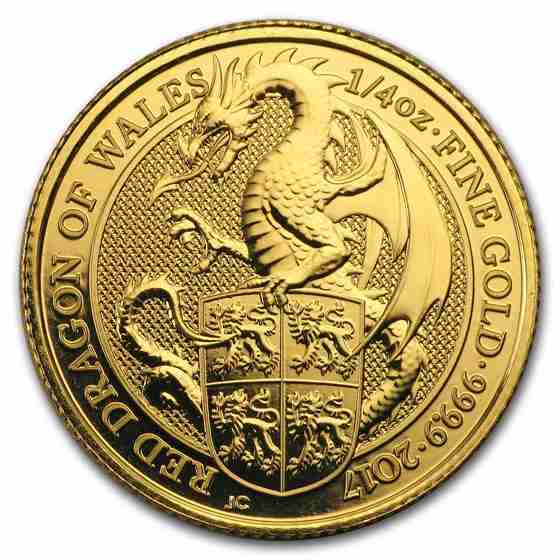
The Benefits and Distinctions Between Pre-1933 & 1 Oz Bullion Gold Coins
Most coin collectors and investors recognize that gold coins are not all alike. A scarce numismatic piece is clearly very different from a modern 1 oz gold bullion coin. But how should semi-numismatic pieces, including common-date pre-1933 gold coins, be viewed? How do they differ from 1 oz bullion gold coins, which type may suit your goals, and what potential advantages does each offer?
This overview explains the two coin categories, outlines their differences, and offers context that may help you decide which coin type could be a better fit for your circumstances.
How Pre-1933 U.S. Gold Coins Differ from 1 oz Bullion Gold Coins
Pre-1933 gold coins differ from bullion coins in several meaningful respects. A well-informed ownership decision calls for learning as much as possible about both categories of coins. Before a purchase or sale, consider the following points.
Coin History
The histories of these two coin categories are not the same. Pre-1933 gold coins were made by the U.S. Mint before the government prohibited private gold ownership in 1933. During the depths of the Great Depression, President Roosevelt signed Executive Order 6102, which required U.S. citizens to surrender their gold, including gold bars and coins. The Executive Order made an exception for collectible, or numismatic, coins.
If government action resembling Executive Order 6102 were ever adopted in the future, numismatic-coin owners might be protected from confiscation. At the time of publication, pre-1933 U.S. gold coins were regarded as collectible coins; in theory, that would make them exempt from confiscation. Thankfully, not all US Presidents were against a gold standard!
The history of 1 oz bullion coins is generally more direct. In many cases, a government simply chose to make bullion for public purchase, giving the coin little narrative history. The 1 oz bullion coins investors bought at the time of publication were typically newer, with history largely limited to their introduction and design. For example, the first modern government-issued gold bullion coin was made by the South African Mint in 1967.
Knowledge Required
Trading bullion gold coins generally requires less knowledge or specialized expertise than purchasing or selling semi-numismatic coins, such as pre-1933 gold coins. Since some of these coins carry added value, that should be understood before completing a transaction. Their value can be influenced by condition, rarity, date, mintmark, provenance, and even overall eye appeal.
Understanding the value of 1 oz bullion coins is generally more straightforward. The key information is purity, melt value, and weight. The broad principle is that bullion coins do not carry numismatic value. Some gold specialists describe bullion as a “pure investment” because its worth is based chiefly on the value of the precious metal itself.
Even so, as a general observation, U.S. gold coins—including bullion coins—have tended to trade at slightly higher rates than foreign gold coins.
Which Coins Offer the Greatest Benefits?
Semi-numismatic coins are not a fit for every owner, and neither are 1 oz bullion coins. The right choice depends on why you own gold. The following categories compare which coin type may work best for different purposes.
Purchase Price
Bullion coins generally have the lower purchase price of these two categories. They were made chiefly for investment rather than for collectors. Their minting process is more efficient, allowing more coins to be produced in a comparatively short time and requiring less labor, less wear on minting plates, and less machine use.
It may be surprising that common-date pre-1933 coins could be purchased at reasonable prices. They also have historical significance and, in theory, are not subject to confiscation. Their value combines the precious-metal component with their numismatic component.
As a result, their cost generally lands between that of purely numismatic coins and that of bullion.
Investment Value
All 1 oz gold bullion coins have investment value, at minimum because of their underlying gold content. They could be placed in precious-metals IRAs and withdrawn at retirement if desired. Unlike numismatic coins, whose popularity can ebb, they did not lose value for that reason. An owner buys them, waits, and their value rises or falls with the spot price of gold.
For that reason, bullion was presented as a stable, dependable investment.
By comparison, pre-1933 gold coins may rise or fall in value with changes in the coin-collecting market. Still, because they are semi-numismatic and retain precious-metal value, they often hold value better than certain coins that are strictly numismatic.
Accordingly, they were also relatively safe investments.
Numismatic Value
Numismatic coins can be worth more than gold’s spot price, including semi-numismatic pieces such as pre-1933 coins. Collectors also value the time spent researching, locating, and studying these coins. The activity is more than a hobby; it is an intellectual pursuit.
Many 1 oz bullion gold coins are attractive. American Gold Eagle coins, for example, feature an
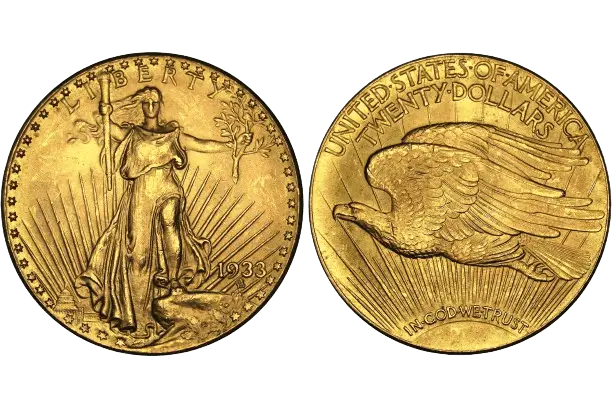
obverse derived from Augustus Saint-Gaudens’s internationally recognized and admired design. The Austrian Philharmonic has another compelling design, showing a grand pipe organ and musical instruments. Although these coins are appealing to examine, they do not carry numismatic value.
In contrast, pre-1933 American Double Eagles carried the Saint-Gaudens design before one-ounce American Eagle bullion gold coins did and offer substantial value to collectors seeking to build their coin collections.
Easy-to-Buy 1 oz Gold Coins
Whether an owner chose semi-numismatic or bullion coins, many options existed for purchasing or selling. At the time of publication, the original article identified popular gold coins that Atlanta Gold & Coin Buyers typically reported having in its inventory.
1 oz. Bullion Gold Coins
1 oz bullion coins are made by government mints worldwide. Each serves as the official bullion coin of its issuing government and is generally considered legal tender.
Their precious-metals value, however, exceeds their stated face value.
These governments take pride in making handsome bullion coins, so many investors favor them over gold bars that are comparatively plain.
The following are several of the best-known examples:

- Gold American Eagles – contain 1 troy ounce of gold, with 91.67% pure gold, 3% silver, and the balance copper. They feature the Saint-Gaudens design and were made by the U.S. Mint from 1986 to the time of publication. This coin has a $50 face value. Find out more about the American Gold Eagle coins.
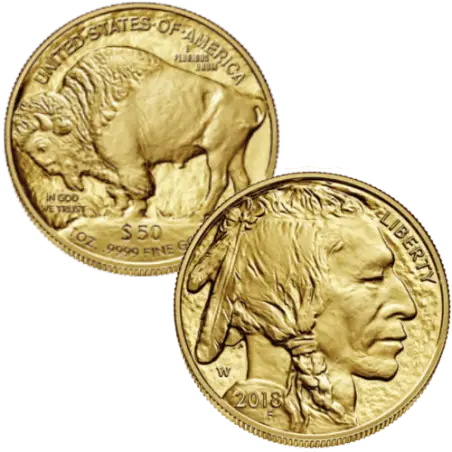
- American Buffalo – contains 1 troy ounce of gold at 99.9% purity. It was produced by the U.S. Mint from 2006 to the time of publication. This was the only U.S.-issued 24k gold coin made for investment purposes and had competed with the Canadian Gold Maple Leaf since its introduction. Like the Gold Eagle, it bears a face value of $50.

- Canadian Gold Maple Leaf – has at least 1 troy ounce of gold and 0.9999 fineness, placing it among the purest 1 oz bullion coins produced. This coin, with a $50 face value, was made by the Royal Canadian Mint from 1979 to the time of publication.
- South African Gold Krugerrand – like the Gold Eagle, this coin contains 1 ounce of gold, but it is 22k
 and uses copper as a base alloy to improve durability. As noted earlier, the South African Mint began making these coins in 1967. It was among the most popular gold bullion coins until sanctions against South Africa halted gold imports to western countries in the 1970s and 1980s. At the time of publication, it remained one of the more popular investment options. It is also one of the few 1 oz coins without a stated face value.


- Austrian Gold Philharmonic – contains 1 troy ounce at 0.9999 purity and was made by the Austrian Mint from 1989 to the time of publication. It is the Euro system’s only bullion gold coin and has a face value of 100 Euros.
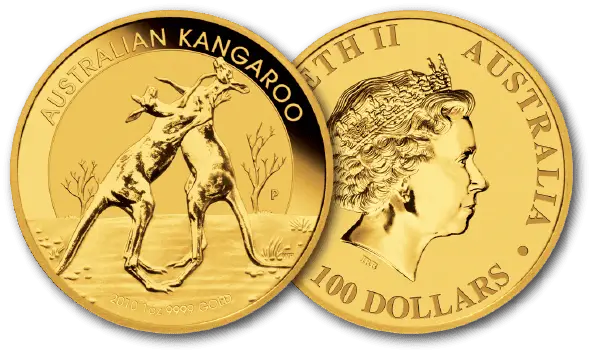
- Australian Gold Kangaroo – This $100 face-value coin consists of 99.99% pure gold. The Perth Mint has produced it since 1986, with new and different designs appearing each year.
Most governments that produce 1 oz bullion gold coins guarantee their stated content and purity. The original article characterized bullion as a safe investment for this reason and because gold prices were relatively stable. It also noted that, because gold can perform differently from traditional investments, it may help reduce risk in a diversified portfolio.
Pre-1933 Gold Coins

At the time of publication, Atlanta Gold & Coin’s blog had assembled the Ultimate Guide to Buying and Selling Pre-1933 U.S. Gold Coins. The original article stated that readers could find a complete list of these coins there, with links to more detailed information on individual coins. These coins feature many compelling designs, including the Indian Head Gold Coin, which shows a Native American chief on the obverse, and the Liberty Head gold coin featuring Lady Liberty.
Pre-1933 coins contain 90% pure gold, with face values ranging from $1 through $20. Because they are semi-numismatic issues, they can interest collectors as well as investors. The United States Mint produced them from 1795 to 1933. The Gold Double Eagle is the largest, at 0.9675 oz, and the smallest is the $1 Liberty Head, at .0484 ounces. In general, smaller coins carry a higher per-ounce price.
At the time of original publication, the article described the following: Although these coins have collector appeal, many could still be purchased for prices only modestly higher than comparable bullion coins.
Buying or Selling Gold Coins
When this article was originally published, buyers and sellers of gold bullion and coins were encouraged to consult a coin expert. Atlanta Gold & Coin Buyers stated that its coin specialists could appraise coins and establish their value.
The original article also stated that the specialists could explain whether certification might be an appropriate option.
When this article was originally published, Atlanta Gold & Coin’s inventory included We buy and sell 1 oz bullion gold coins as well as pre-1933 coins. For those who preferred metals other than gold, the original inventory also included silver coins and additional metals.
At the time of publication, Atlanta Gold & Coin reported competitive rates and a transparent process, with the aim of helping customers understand pricing whether buying or selling. Contact us today for online orders, appraisals, or an appointment to visit the Johns Creek location in metro Atlanta.
At publication, the article welcomed inquiries and expressed Atlanta Gold & Coin’s interest in helping with investing and collecting goals.
At the time of publication, readers were invited to call at: 678-264-6421