


 Hunter Rhodes
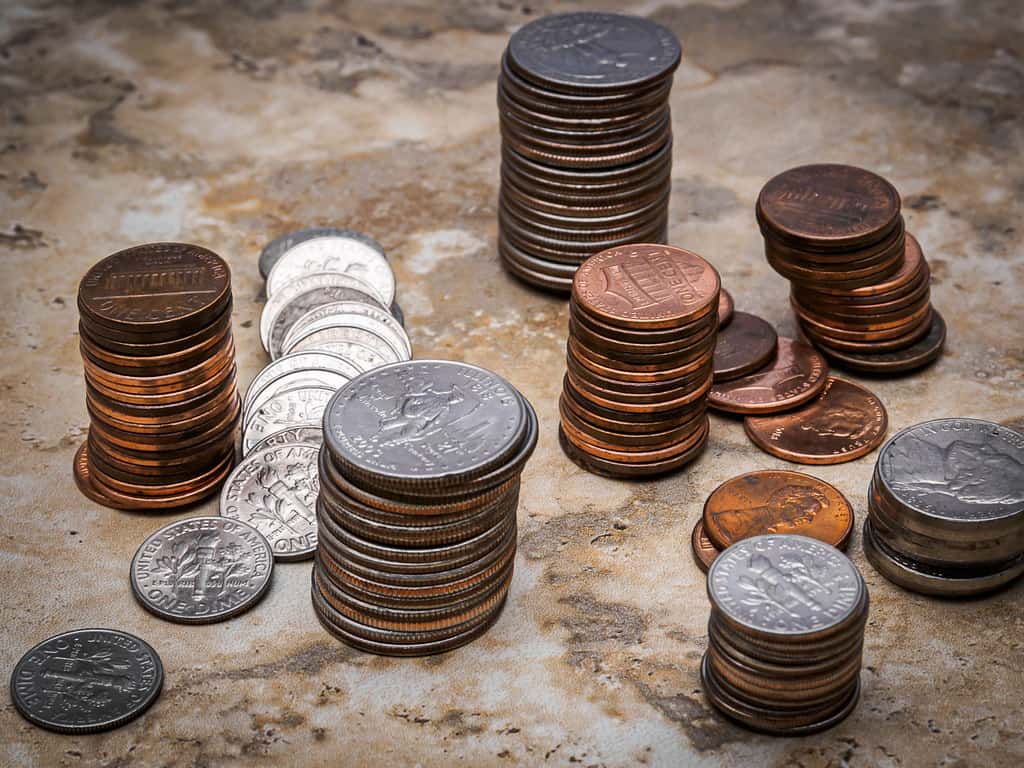
Finding an interesting coin in change is part of the pleasure of collecting. Finding one worth a large sum is possible, but a headline about a rare example does not make every coin of the same date valuable. The premium usually depends on a specific variety, mint error, composition or exceptional condition.
Before assuming your coin matches a news story, identify exactly what distinguishes the reported example. These four points can help you investigate without dismissing a real discovery or paying for unnecessary services.
1. A rare error is more specific than its date
A standard 1999 Georgia quarter and a quarter struck on an experimental planchet are different products of the minting process. PCGS's auction record for an experimental-planchet example identifies that special attribution. It does not establish a high value for ordinary Georgia quarters.
Color alone is not enough to diagnose a wrong-planchet or experimental-metal piece. Toning, plating and environmental changes can alter appearance after a coin leaves the Mint. A scale can provide useful evidence, but a weight reading by itself does not authenticate a rare error.
The same applies to doubled dies, missing design elements and unusual lettering. Compare the exact diagnostic features with a recognized reference. Damage or common forms of mechanical doubling can resemble something more valuable in a low-resolution photograph.
2. A record sale may concern exceptional condition
Two coins with the same date and mintmark can have very different values. A record price may relate to one of the finest certified examples, an important variety or unusually desirable surfaces. An ordinary circulated coin is not comparable simply because the main design matches.
Distinguish an asking price from a completed sale, and check whether an auction result includes the buyer's premium. Also verify the grading service and any special designation. A screenshot showing only the headline amount leaves out much of the information needed for a comparison.
Do not assign a top numerical grade from an app's image match. Identification, authentication and grading are separate tasks. A photograph can suggest what to investigate, while lighting, wear, surface damage and subtle variety details may require closer examination.
3. Gold and silver colors do not establish metal content
Modern Sacagawea and related golden-colored dollars are not gold bullion. The U.S. Mint describes their copper core and manganese-brass outer layers. Their color is a design and composition feature, not evidence that the entire coin is made of precious metal.
Bicentennial quarters, half dollars and dollars require attention to the exact version. Ordinary circulation issues are copper-nickel clad, while special collector versions include 40% silver pieces. Some San Francisco proofs are clad, so an “S” mintmark alone does not prove silver content. PCGS's Bicentennial-dollar guide distinguishes the versions.
For familiar older U.S. coinage, standard twentieth-century dimes, quarters and half dollars dated 1964 and earlier contain 90% silver. Kennedy halves from 1965 through 1970 contain 40% silver. Wartime nickels and later collector issues have their own rules; verify the issue instead of applying one cutoff to every denomination.
A normal 1943 cent is zinc-coated steel. Rare bronze examples and altered or plated imitations require specialist attention. A basic magnet or weight check can help screen an item, but neither alone supplies a final rare-coin authentication.
4. Circulation history does not tell you everything
Many collectors search bank rolls and change, but you cannot know how thoroughly a particular coin has been examined before. It is too strong to claim that valuable coins are always bought rather than found. The Mint deliberately released 2020 West Point quarters with a V75 privy mark into circulation, providing a clear example of a collectible feature worth learning to recognize.
The better expectation is that most ordinary change has modest value, while careful identification can reveal exceptions. Enjoy the search as a hobby without relying on it to produce income or assuming a container of old coins is a guaranteed windfall.
What to do with a plausible find
Set it aside in a suitable holder without cleaning it. Record the date, mintmark, denomination and the feature that seems unusual. Take sharp photographs of both sides and any relevant detail, along with a weight if you have a suitable scale.
Then ask an experienced dealer or the relevant specialist whether further examination is justified. Paid grading and shipping can exceed the value of an ordinary coin, so establish a plausible reason before submitting it. Atlanta Gold & Coin Buyers can help with an initial discussion of the types of coins we handle. Contact us with the details rather than only the headline price you saw.

About the author
Hunter Rhodes
Owner & Managing Director, Atlanta Gold & Coin
Hunter joined Atlanta Gold & Coin in 2022 and purchased the company at the end of 2024. He has been investing in precious metals since 2010, with gold remaining his favorite metal. While he may never admit it, Hunter has a numismatic collector’s side, especially when it comes to select type coins. Libertads and Engelhard rounds are among his favorites.
Meet our team