6 Notable Details About American Eagle 1 oz Silver Coins That May Surprise Collectors
At first glance, American Eagle 1 oz silver coins can appear to be a simple investment choice, perhaps even an ordinary one. Millions have been struck, and production was continuing when this article was originally published. They may not seem to have the same sense of mystery or allure as a 19th century silver dollar.
A closer look, however, shows that the American Silver Eagle is a compelling coin with an interesting history despite its comparatively brief existence. The original article set out six notable facts about the American Silver Eagle, including several details that could surprise readers.
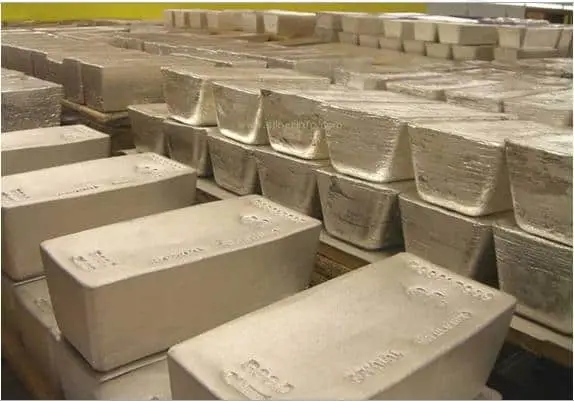
1. The story began with a silver stockpile.
The American Silver Eagle uses Adolph A. Weinman’s graceful earlier Walking Liberty half dollar design: Lady Liberty appears in profile on the obverse with the inscription “In God We Trust,”. John Mercanti’s triumphant heraldic eagle appears on the reverse. It is widely regarded as an attractive coin, which makes its practical origin—disposing of surplus silver—especially surprising.
The United States government held an enormous silver stockpile, exceeding 100 million ounces. Many lawmakers believed that this extra precious metal was holding down silver prices. Following lengthy deliberation, Congress approved a coin program in 1985 chiefly to reduce that excess. The legislation authorized gold and silver eagle issues.
The program started in 1986, and the silver stockpile was not exhausted until 2002. At that point, the American Silver Eagle program might have ended permanently. Instead, because the coins proved so popular, the United States Mint began purchasing silver so it could continue making them.
2. Silver Eagles Use Silver Mined in the United States

Under the Coin Act of 1985, American Silver Eagles were to be made only from silver mined in the United States. Most U.S.-mined silver comes from Alaska, Nevada, and Idaho. After mining, the metal is formed into blanks, or planchets, and private producers ship those planchets to the U.S. Mint.
Only a limited group of silver fabricators is entrusted with supplying the U.S. Mint’s silver planchets. One of the largest suppliers used for American Silver Eagle production was Sunshine Minting. The company was also among the better-known makers of silver bullion rounds and bars.
In 2020, a short supply of planchets created shortages and temporary interruptions in American Silver Eagle production. Covid-19 also contributed to reduced output. Later in the original article, the U.S. Mint’s steps to address Silver Eagle demand during the Covid-19 crisis were discussed.
3. American Eagle 1 oz Silver Coins May Be America’s Most Collected Silver Dollar.
When people consider collectible silver coins, American Eagle 1 oz silver coins may not be their first thought. These pieces are commonly called “bullion” coins. Bullion means that a coin’s value comes principally from its underlying metal content rather than from a collectible premium.
Collectors may be more inclined toward Peace dollars and Morgan dollars, which were made in 1935 and earlier. Still, numismatics expert Michael “Miles” Standish stated that American Eagle silver bullion coins were probably the most collected of all U.S. silver dollars.
Between 400,000 and 500,000 million had been minted, with many additional millions struck annually when the article was published, leaving plenty of coins to collect. Collectors often acquired American Silver Eagles in tubes or in bulk, including monster boxes (green boxes holding 500), while investors added them to precious-metals IRAs as a hedge against inflation.
The original article noted that proof Silver Eagles added to an IRA needed their original government packaging, including the COA, case, and box. That packaging requirement was one reason proof Silver Eagles in original boxes tended to trade at higher levels than certified proof Silver Eagles.
Although considerably more Morgan dollars were minted than American Silver Eagles—about 657 million altogether—an estimated 275 million remained. Morgan dollars are certainly interesting and collectible, but the original article concluded that more people likely held American Eagle 1 oz silver coins in their collections.
4. COVID-19 Delays Created a Rare Uncirculated Silver American Eagle Issue.

When the COVID-19 pandemic reached the United States, daily life changed sharply in nearly every respect. U.S. Mint production of American Eagle 1 oz silver coins was affected too. For some collectors, the circumstances fortunately resulted in a rare coin issue.
The West Point Mint had produced bullion Silver Eagles from 2018 through 2020. After a mint employee became ill with the virus, the facility closed for thorough cleaning to protect other workers. Bullion Silver Eagle output paused, resumed at a lower level, and was eventually stopped altogether.
Meanwhile, the Philadelphia Mint was assigned part of the production burden. During April, it produced roughly 240,000 American Silver Eagle 1 oz silver coins. The original article described these as among the rarest Silver Eagles and as the lowest-mintage bullion Silver Eagles.
That mintage was comparable with some of the lowest produced proof silver eagles. When this article was originally published, grading services had certified these coins as “Emergency Issues,” making them a sought-after prize. Depending on grade, they could sell for well over $100, and the article expected collectors to value them for the historical circumstances behind their production.
5. The Coin Received a Design Update in 2021.
From 1986 until mid-year 2021, American Eagle 1 oz silver coins carried the same design. In 2021, however, the U.S. Mint made Silver Eagles with an additional design alongside the original type.
At publication, The 2021 coins carrying the first design, now called “Type 1 silver eagles,” display a refreshed rendering of Adolph A. Weinman’s Walking Liberty Half Dollar. That obverse artwork was also
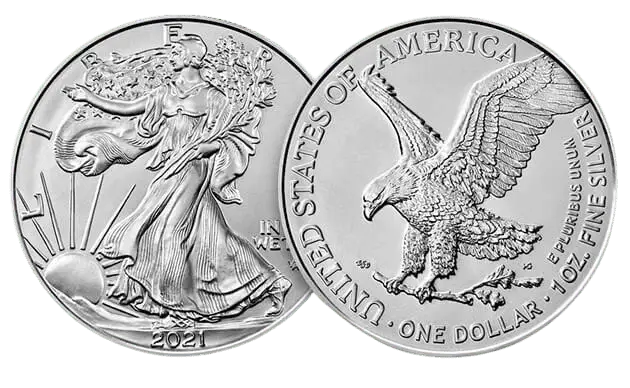
kept as the obverse design for the newly redesigned coins.
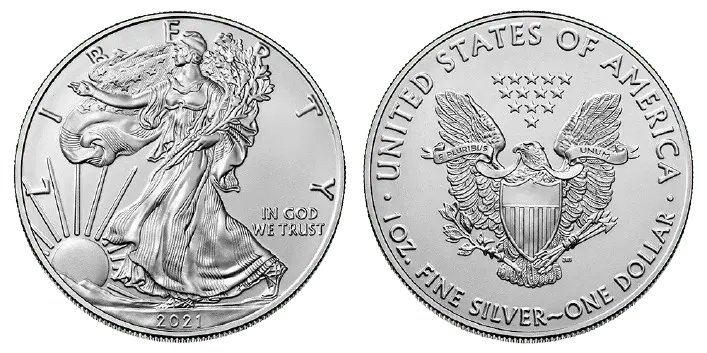
The distinction lies in the reverse designs. Until mid-year 2021, every Silver Eagle showed John Mercanti’s heraldic eagle holding an olive branch and arrows. Afterward, the coins’ reverse side received a new design.
Emily Damstra created the new reverse, which depicts an eagle approaching a landing. The bird holds a branch, appearing ready to place it into a nest beneath it.
Both reverse versions carry the inscriptions United States of America, 1 oz. Fine Silver, One Dollar, and E Pluribus Unum. A mintmark, when present—such as “S” for San Francisco—also appears on the reverse. As might be expected, the newer design is called a “Type 2” Silver Eagle.
At publication, Notably, Type 1 silver eagles drew greater interest after Type 2 coins were introduced, because their mintage was comparatively limited beside the quantities struck in more recent years.
6. One American Eagle 1 oz Silver Coin Brought More Than $10,000 at Auction.
American Eagle 1 oz silver coins are U.S. legal tender, with the United States government guaranteeing one troy ounce of 99.9% pure silver. In straightforward investment terms, the original article explained their value as silver’s spot price for one troy ounce plus a dealer premium or markup.
Some Silver Eagles, however, are worth much more. In 2019, a 1999 Silver Eagle brought more than $13,000 at auction. When the article was originally published, it had recently reached another record auction result of $14,400. A 1999 Silver Eagle might seem exceptionally rare, perhaps comparable to the 1995-w proof Silver Eagle, whose mintage was only 30,000 coins.
In fact, 1999 was not an especially low-mintage year; approximately 7.5 million coins were produced. Compared with output in the years immediately before publication, that total looked low, but at the time it represented the second-largest Silver Eagle production run from the program’s first two decades.
What made the coin so valuable? First, it earned an MS70 grade, which indicates perfect condition. That outcome was unusual for 1999 because many coins from that year were weakly struck. Milk spots, the milky-looking discoloration found on coins, were also common on 1999 Silver Eagles and lowered their grades.
The original article reported that the latest NGC and PCGS population reports then showed only 481 & 62 1999 Silver Eagles, respectively, graded MS70. More than 100,000 coins had been submitted to those third-party certification services. The article therefore attributed their very high value to their rarity.
At the time of publication: Buying and Selling American Eagle 1 oz Silver Coins
When this article was originally published, collectors interested in American Eagle 1 oz silver coins might have considered adding several tubes, proof Silver Eagles, or even a monster box to a collection. At that time, the original article described buying and selling Silver American Eagle coins as straightforward when working with experienced coin dealers. Atlanta Gold & Coin stated that it could help collectors and investors pursue their goals through fair rates and transparent pricing. When originally published, the article invited readers to Contact us today learn more about these notable coins from the coin experts at Atlanta Gold & Coin Buyers and its local perspective.
At publication, this was the call-today number: 678-515-5763!