7 Seven Questions People Have Wanted to Ask a Coin Dealer
Among the many careers a person might consider, becoming a coin dealer or numismatist probably does not immediately come to mind. It is a specialized field, and many people have little familiarity with its day-to-day workings. At the time of publication, Atlanta Gold & Coin regularly received questions from customers interested in how the business operated.
At the time of publication, clients were also curious about where coins and bullion went after Atlanta Gold & Coin acquired them. The owner was especially often asked how a “hobby” could develop into a full-time business.
This article was intended to answer seven questions Atlanta Gold & Coin regularly received from the public at the time of publication. The information was expected to interest readers and customers alike. In some instances, it was also meant to offer reassurance about what ultimately happened after the company purchased coins, bullion, or entire coin collections.
What Happened to Coins After They Were Bought?
When this article was originally published, one of the first questions from someone selling their coins or coin collection concerned what happened to items after Atlanta Gold & Coin purchased them. Sometimes the question came from simple curiosity. Often, though, it reflected a sentimental connection to coins that had belonged to a loved one.
At the time of publication, Atlanta Gold & Coin sometimes compared its role to that of an adoption agency. The aim was to place coins in an appropriate new home. Coins, bullion, and paper currency each had distinct markets, so much of the work involved determining the proper market for the different items the company acquired.
That process was straightforward when the purchase involved one item, or one category of item, such as gold coins. It could become more complicated when Atlanta Gold & Coin acquired many different kinds of material. A varied coin collection required more work, but at the time of publication this was described as a welcome challenge that helped keep the work interesting and engaging.
Were the Coins Melted Down?
At the time of publication, another daily question was whether Atlanta Gold & Coin melted coins down. It was a reasonable question, particularly because the industry frequently used the terms “junk silver” and “melt value”.
When originally published, the article stated that Atlanta Gold & Coin did not melt the coins and bullion it purchased. The company described that outcome as unfortunate because it included coin collectors and because melting can, in one sense, erase part of history.  The article also noted that doing so would be very expensive.
The article explained that refineries generally paid a much lower percentage of spot price, or of an item’s melt value, than Atlanta Gold & Coin offered customers at publication. It also noted that, in many circumstances, melting, defacing, or damaging U.S. coins and paper currency was illegal.
Who Bought the Coins?
If Atlanta Gold & Coin did not melt the coins it purchased, the natural follow-up was who eventually bought them. The original article observed that coin collecting was less popular than it had once been, while many dedicated collectors were getting older or passing away.
Although coin collecting was not as widespread as it once was, the original article reported that interested collectors and investors remained. At publication, national coin-show attendance and the continued strength of recent coin auctions were offered as partial evidence of that ongoing interest.
At the time of publication, Atlanta Gold & Coin found that many people drawn to numismatics, or coin collecting, worked in specialized occupations. Many enthusiastic collectors encountered then were in medical, dental, or engineering fields, although the article made clear that this was not always true.
While the original article acknowledged that there were fewer collectors at that time, it said many people were purchasing precious metals as an investment or a hedge against inflation. It further stated that, even if many financial advisors were reluctant to say so, adding gold and silver to a portfolio helped reduce uncertainty and increase security.
The original article stated that gold and silver provided benefits beyond serving as additional assets, and that it historically has served as an excellent hedge against inflation.
At the time this article was written, the reported year-over-year inflation rate was 6.2%, roughly three times the normal rate. The article reported that this had led many new investors at that time to seek ways to preserve wealth and retain purchasing power.
Where Were the Coins Sold?
At the time of publication, Atlanta Gold & Coin’s intention was to sell as much coinage and bullion as possible to local customers. Still, not every item acquired was suitable for local sales. As a high-volume dealer then, the company also occasionally purchased large quantities of coins and bullion that could exceed local demand.
Beyond local sales at publication, Atlanta Gold & Coin sold coins by mail to customers outside metro Atlanta, including people in other states. The original article also said the company occasionally used auction services for more obscure items that needed exposure to a broader potential audience.
Finally, at the time of publication, Atlanta Gold & Coin also sold items through the various dealer networks to which it belonged.
At publication, coin-dealer networks were described as very active, with thousands of trades occurring each day. Atlanta Gold & Coin would inevitably have excess inventory another dealer needed. Conversely, the original article reported that the company regularly filled orders through those networks and suppliers when specific requested items were unavailable in local inventory.
Where Did the Coins Come From?
As noted earlier, Atlanta Gold & Coin occasionally obtained inventory through dealer networks and suppliers, but, at publication, this was generally done only to fill a particular order. By percentage, the article reported that this represented 10% or less of its supply.
At the time of publication, Atlanta Gold & Coin received much of its coins and bullion from individual investors. With alternative investments such as Bitcoin gaining popularity, many people were cashing out precious-metals holdings to invest in Bitcoin or Ethereum. The original article said potential gains could be higher than those normally seen in precious metals, while downside risk could also be substantially greater.
Along with individual investors and collectors, Atlanta Gold & Coin regularly purchased estate coin collections at the time of publication. The company stated that it specialized in large, diverse collections that might require hours or days to evaluate. Such collections were described as consistently interesting because many were decades old and had often passed through generations.
At publication, Atlanta Gold & Coin described enjoying the stories behind collections first begun in the 1800’s by a distant ancestor. Stories often involved a convenience-store or small-grocery owner building a collection by setting aside coins from daily sales. The original article said that the histories behind collections were probably the most intriguing part of the work.
Did the Company Speculate on Gold and Silver Prices?

Because Atlanta Gold & Coin had a reputation for paying competitive prices, it was frequently asked at publication whether it speculated on gold, silver, platinum, or palladium prices. After all, if the company paid near or above gold and silver spot prices, how could it afford not to speculate?
The original article said Atlanta Gold & Coin rarely speculated about future gold and silver prices. In that industry, it described short-term price direction as impossible to know. Global political developments, GDP, jobs reports, CPI, PPI, trade deficits, and similar factors could all substantially affect prices in the short term. A crystal ball would have been welcome, the article observed, but economic reports themselves often surprised even experts.
The article stated that the only occasion when Atlanta Gold & Coin might speculate on gold and silver prices was after a flash crash. This referred to a circumstance in which prices dropped abruptly and dramatically without a valid reason.
Put another way, if markets appeared to be controlled, the original article said Atlanta Gold & Coin might pause until those markets settled and corrected themselves.
How Did the Business Make Money?
All of these questions ultimately led to how Atlanta Gold & Coin made money. At publication, its business model was described as relying on low margins and high volume. That meant the company did not depend on individual transactions, but on the total business conducted over the course of the year.
At the time of publication, Atlanta Gold & Coin used target margins, or buy/sell spreads, for the various items it bought and sold. Its lowest margins applied to the most liquid and stable coins and bullion. Higher set margins applied to less-liquid material and items subject to larger price movements.
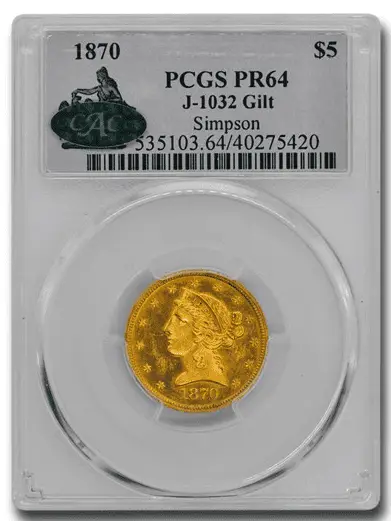 For example, at publication, the smallest spreads applied to United States gold coins, particularly popular coins such as American Gold Eagles and Buffaloes. Margins were somewhat higher for silver and platinum bullion because silver and platinum were more volatile metals than gold.
Finally, the article stated that rare coins, commonly called collectible or numismatic coins have the highest margins. At publication, this was especially true of more obscure coins, because their market was somewhat limited and they had fewer potential buyers.
At the time of publication, Atlanta Gold & Coin reported having more sellers when gold and silver prices rose, and more buyers when those prices fell. This could sometimes create a challenge and function as a balancing act. The company needed to track its basis in items so it could sell at a profit while meeting its established minimum margins.
Summary
Atlanta Gold & Coin enjoyed preparing this article and explaining for readers how a coin dealer typically works. It was intended to address questions people may have long wondered about but felt reluctant to raise. Practices can differ from one dealer to another, yet this discussion was meant to offer useful perspective on how dealers generally conducted their business.
Providing this explanation reflected Atlanta Gold & Coin’s stated commitment to transparency. When the article was originally published, readers with additional questions about the company’s operations were invited to get in touch. The original article also stated that questions about buying or selling gold bullion, silver coins, rare coins, or an entire coin collection could be answered.
The original article stated that Atlanta Gold & Coin emphasized transparency and offered rates described as among the industry’s most competitive. It also described the company’s customer service as concierge-level and unparalleled within the industry. In addition, the article noted that Atlanta Gold & Coin was a proud lifetime member of the American Numismatic Association, along with other leading third-party organizations.
Contact us At publication, readers were invited to use the website or call 404-236-9744.