7 Major Considerations That May Influence the Value of Certified Coins
Some collectors may say, “Not all certified coins are created equal.” The original article noted that, we’ve written a few articles over the years addressing certified coins, including when to submit your coins for certification and the third-party grading services (TPGS) considered strongest. Still, the discussion had not yet covered the particular considerations that can influence a certified coin’s value. At first glance, it may seem reasonable to assume every certified example should bring the same price. That conclusion sounds sensible, but the original article explained that the marketplace does not always work that way.
Even the same exact coin certified by the same TPGS may carry meaningfully different prices because of several considerations. This article was intended to clarify the factors to watch for, helping readers evaluate rare-coin investments and set reasonable expectations when selling a collection of certified coins.
FACTOR #1: The Third-Party Grading Service
Earlier discussion addressed why coins certified by established, well-regarded TPGS matter, and that point is worth restating in this context.
At publication, As a reminder, many grading services appeared and disappeared over the years, while only a small number remained established. Long operating histories matter because they can indicate strict grading methods and consistently applied standards. Most companies that later became defunct did not grade coins accurately or failed to use the same benchmark across every coin they certified.
Although grading services may have existed before ANACS, ANACS was the first recognized third-party grading service to enter the marketplace. It began providing grading services in 1979 and, at the time this article was published, remained in business, though it had moved behind PCGS and NGC, described as the two leading third-party grading services. PCGS began in 1986, with NGC beginning the following year. ICG, described as a second-tier grading service, started offering grading services in 1998.
At the time this article was written, these were described as the only active third-party authentication firms recognized by professionals across the coin industry.
FACTOR #2: The Generation of the Holder
As readers might expect, the leading TPGS have experienced a few
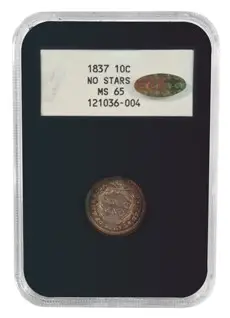 NGC 1st Gen Holder
changes over the years with respect to their coin holders and their grading standards. Some collectors also place an added premium on certain early holders introduced by grading services. Often called first generation holders, these holders were frequently more sought after by collectors and dealers.
PCGS’s first holder had a somewhat archaic appearance. It was small, noticeably smaller than the standard holder size used at publication, and carried a light-green label that appeared typewritten. It also was not designed to hold the coin as securely as later holders. Shaking one may produce a rattling sound. For that understandable reason, collectors affectionately call these holders “rattlers”, and they were quite popular.
A first-generation holder can represent a piece of third-party grading history through its retro or early-holder design. The original article also reported that many collectors, along with some dealers, believed PCGS standards were stricter when the company began. For instance, an MS63 coin from the company’s start in 1986 might be viewed as nearer an MS64 under standards used at publication. This was not meant to suggest grading had become lax; instead, standards had become more consistent and better aligned with the Sheldon 70-point grading scale.
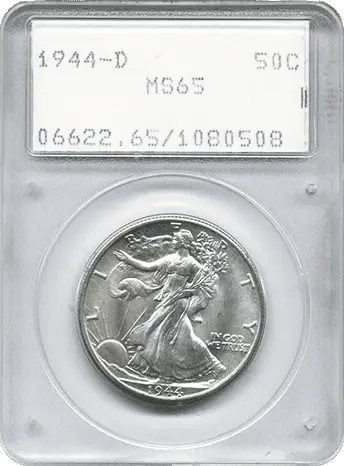 PCGS 1st Gen Coin Holder
NGC, identified as the other top-tier TPGS, has a comparable holder that was also often in demand at publication. Its first-generation holder is called an “Old Fatty Holder.” This name refers to the holder’s thickness, which is plainly greater than the holders used when this article was published. Although the “old fatty holder” resembles NGC holders used at publication, its label and overall design are somewhat more basic.
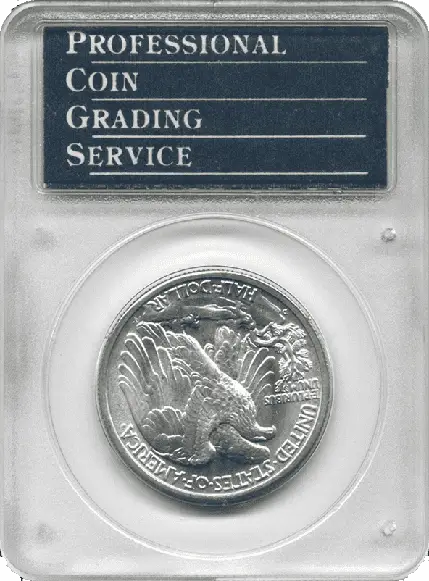
In general, PCGS rattler holders were somewhat more popular and more sought after than NGC’s “old fatty”
holders, although either type could be appealing. Depending on the particular coin, coins encapsulated in these holders could sometimes sell for modestly more than comparable coins in then-current generation holders.
FACTOR #3: Toning/Tarnishing
A high-grade coin from one of the four grading services mentioned above can be desirable, but appearance also affects interest. Most remaining considerations involve a coin’s aesthetics. The discussion begins with one of the easiest features to notice: toning, tarnishing, or the absence of either.
When the U.S. Mint first produces a silver coin, it commonly has a bright, white, frosty, or snowy look. With time, handling, or exposure to the elements, the coin can develop toning or tarnish. Coins showing toning or tarnishing were generally less popular and traded for lower prices than “white” coins. At the time of publication, Atlanta Gold & Coin reported, as a dealer participating in large industry dealer networks, that most other dealers were seeking “white coins.”
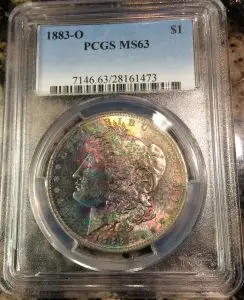 Rainbow Toning
That does not mean toned coins lacked a market; it means that, at the time of publication, an offer for a toned coin could be somewhat lower than an offer for one without toning.
By contrast, coins displaying a “rainbow” or “monster rainbow” appearance can be especially popular and may sell at a premium, sometimes a substantial one. These coins show appealing toning in multiple colors, which can include blue, purple, green, pink, and orange, among other hues.
Because this appearance was popular, counterfeiters had tried to reproduce it. The original article therefore recommended purchasing higher-value rainbow-toned coins only when they had been certified or professionally graded.
FACTOR #4: Red or Brown SpotsAt publication,
Spots do not affect a coin’s grade. When a third-party grading service certifies a coin, it focuses on the degree of surface wear or contact marks. As a result, a coin that is visually unappealing, including one with red or brown spots, can receive the same grade as a coin with no visible spots.
Pre-1933 U.S. gold coins are particularly susceptible to red or brown spots. These coins contain 90% gold and 10% copper. Over time, copper spots may emerge on a coin’s surface. Red copper spots are most common, although brown-spotted coins were also regularly seen at the time this article was published.
Spots on a coin do not necessarily indicate mishandling. They relate more directly to the quality of the gold planchets—the flat metal disks used to make coins—used by producers. Environmental exposure over the years, including high humidity or extreme heat, can also cause unattractive spots to develop.
Even a coin that appeared spotless when a third-party grading service encapsulated it may develop visible spots later. In some situations, the outcome is simply luck of the draw.
As with other aesthetic concerns, including toning, a coin with red or brown spots may bring less money. Collectors of pre-1933 U.S. gold coins can be especially particular about surfaces, so the original article explained that a local coin dealer would likely have offered a somewhat discounted rate for spotted coins.
FACTOR #5: Grease Marks or Dirt
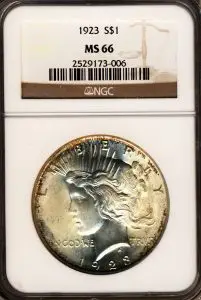
The original article characterized U.S. Mint quality control as apparently problematic during the 1800’s and early 1900’s. Some coins, particularly U.S. gold coins, can show grease stains or marks, or dirt. The issue was attributed to dies that were often overused, inadequately cleaned, or not replaced as often as they should have been.
Dirt and grease stains do not technically change a coin’s grade because grading concerns the amount of wear. They can influence appearance and, in turn, value. Grease stains tend to appear as small dark-brown or black marks or streaks rather than true spots, while dirt is usually found within the coin’s recessed areas.
When examining a coin with a loupe, a dealer looks for signs of these concerns because they can influence the coin’s value.
At publication, demand and value for these coins were described as comparable to coins with spots. Again, collectors—particularly people potentially spending thousands of dollars—typically wanted a clean coin with no issues readily visible to the naked eye.
FACTOR #6: The Surfaces of the Coin
The discussion so far has centered on a coin’s visual appeal. To conclude that portion, the article turns to one final concern that also involves the coin’s surface, though it approaches that surface from a somewhat different angle.
As noted earlier, newly produced U.S. Mint coins have a frosty or snowy look, a feature commonly known as mint luster.
Coins retaining complete, full mint luster and original surfaces, without the aesthetic concerns discussed above, were in the strongest demand at publication.
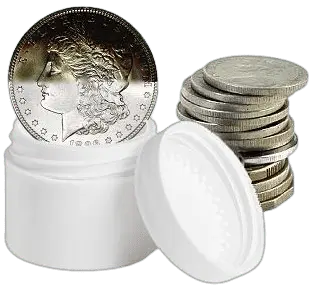 A “dipped” coin
At publication, A coin’s original surface can be changed through dipping in a solution, yet a TPGS may still assign it a straight grade. A straight grade is the letter-and-number grade shown on a coin holder’s label, with no qualifying notation attached.
Coins with problems, especially coins that have been altered, generally receive a detail grade. Collectors and dealers usually prefer coins carrying an actual numerical grade instead of a detail grade.
Coins may be dipped in a solution to remove dirt, toning, tarnish, or spots. Even if that intended result is achieved, a dipped coin unfortunately never displays the same original mint luster as one that was not dipped. A coin dealer may describe a preference for coins with the “original skin” or “original surfaces.”
Indeed, high-end collectors may insist on such coins because they can view a dipped coin as altered and undeserving of the grade assigned by the grading service.
Dipping changes the surface of any coin, gold coins included. Occasionally, dipped gold coins develop an unusually shiny appearance or toning that is not typical of gold coins. In the trade, these may be called a “Euro” look—perhaps fashionable across the pond, but not generally regarded the same way here.
FACTOR #7: Condition of the Holder
The discussion concludes with lucky number 7: the condition of the holder itself. Although this may not seem like a contributing factor, it is, because it affects how the coin looks when held. A common industry expression concerns how a coin faces up.
Coins housed in poor-quality, cracked, scuffed, cloudy, or scratched holders commonly sell for less than comparable coins in clean, attractive holders. It is like renovating a home’s interior while allowing the exterior to remain rundown.
 Damaged Hologram
That situation would make the home difficult to sell. Similarly, when a collector plans to invest hundreds or even thousands of dollars, the coin and its holder should both be visually pleasing.
A coin can, of course, be “reholdered” by a TPGS, but that process requires both time and money. The more valuable the coin, the greater the expense.
At the time this article was written, every third-party grading service was experiencing substantial Covid-19 delays, so receiving a submitted coin back after reholdering could take months.
Although the rare-coin market is not as volatile as the stock market, conditions can change over several months. As a result, demand, marketability, and the value of a coin could be substantially lower by the time it returned from the grading service.
This was presented as a reason to care for certified coins properly so their holders would not be harmed. At publication, Atlanta Gold & Coin recommended storing coins in a PCGS or NGC coin holder, providing separation between coins and helping prevent holder-surface problems.
Summary
This article covered seven issues that can reduce the value of certified coins and was intended to help readers preparing to purchase a first certified coin or sell a final one. At publication, Atlanta Gold & Coin recommended purchasing only coins graded by the leading third-party grading companies discussed above, preferably NGC or PCGS.
The holder in which a coin was originally slabbed may also influence its value. PCGS rattler holders and NGC old fatty holders can potentially carry additional value.
The article also addressed a coin’s appearance, including toning and tarnish. One exception is attractive rainbow or monster rainbow toning, which can increase a coin’s value. Other aesthetic concerns can include red or brown spots, dirt, grease stains, and problems affecting the coin’s surfaces.
When this article was originally published, readers buying certified coins were advised to watch for and try to avoid these problems. Those selling such coins were told they might receive less. Maintaining holder condition was also important: damaged holders made coins harder for a dealer to sell and could require having the coin “reholdered”, adding time and expense.
Atlanta Gold & Coin hoped readers found the article both useful and interesting. At the time of publication, readers in the market to & Coin were invited to contact the Atlanta Gold & Coin experts if they wished to purchase certified coins or sell your certified coin collection.
Happy treasure hunting!