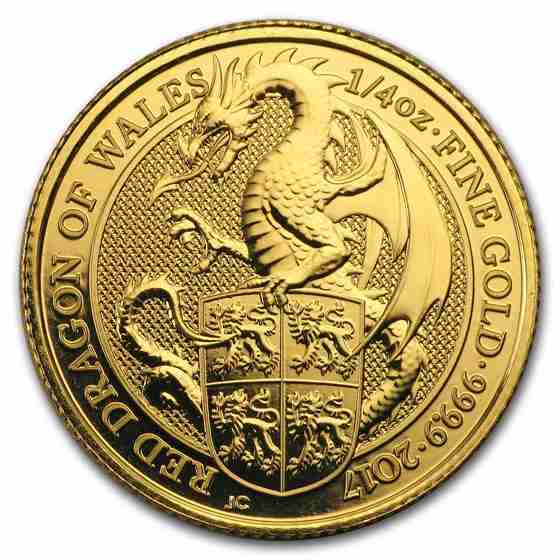
How Gold & Silver Coins Might Be Used Following a Dollar Collapse
People who decided to purchase gold & silver coins did so for several different reasons. Those reasons could include investing, seeking an inflation hedge, and preparing for financial or economic disruption. One major motivation, however, was protection against what the original article characterized as a possible, and likely, collapse of the dollar.
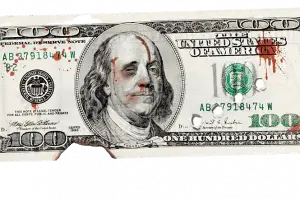
When this article was originally published, central banks worldwide had followed loose monetary policies since the pandemic, hoping to encourage economic growth. The article suggested that this approach created a real possibility that citizens could lose confidence in their own national currencies.
The original article pointed to numerous historical examples of this kind of event. At the time of publication, it identified Turkey, Venezuela, Argentina, and Zimbabwe as recent cases experiencing severe inflation or hyperinflation.
At the time this article was written, much of the world was described as facing inflation near double digits, reducing the purchasing power available to ordinary citizens.
At publication, Situation Reported as of Q3 2022
When this article was originally published, the U.S. dollar remained the world’s reserve currency and was often regarded as a safe-haven currency. By the third quarter of 2022, it stood at a 20 year high against the Euro and a 24 year high against the Japanese Yen. The article argued this did not reflect a sound monetary system; instead, it attributed much of the result to global events. Its comparison was that the dollar was the least dirty shirt in the laundry.
With a monetary base of $9 trillion, national debt exceeding $30 trillion, yearly deficits above $1 trillion, and what the original article described as an official recession, it presented reasons to expect the dollar to weaken over time.
At publication, The article said this would be particularly likely if the Federal Reserve changed monetary policy at the end of that year or the beginning of the next and started another round of quantitative easing.

Put another way, this referred to a government monetary policy in which the central bank buys bonds to add more money to the financial system. That, in turn, artificially lowers interest rates and, in theory, is intended to help stimulate growth.
At publication, The fiscal and monetary conditions described in the original article were one reason many people purchased government-minted gold and silver coins, including American Eagles and Canadian Maples.
From a practical perspective, though, the question was how such coins should be used if a monetary or currency collapse occurred.
At publication, The original article outlined five predicted ways gold and silver coins might be used for barter or commerce. Before considering precious metals as a means of barter or commerce, however, it said readers first needed to understand the legal-tender laws then in place.
Gold & Silver Legal-Tender Laws
Since the original article published a few years earlier, several states had passed legal-tender laws. Those laws made gold and silver legal tender, or, stated more simply, an acceptable currency form.
When this article was originally published several years later, the number of states was described as nearly twice as large. The article speculated that the figure might increase further by the time readers saw it.
The original article viewed legal-tender laws positively for precious metals. It said they eliminated state income tax on sales of gold and silver coins, calling that an important first step. In certain states the treatment was limited to U.S. coins, while in others it was broader.
As a related point, the original article reported that Georgia had no sales tax on sales of coins and currency, although the state had not passed legal-tender laws at publication. It stated that such laws would remove state income taxes on gains realized when coins were sold above their purchase price.
The article stated that federal income taxes still applied to profits from selling gold and silver, including in states that had enacted legal-tender laws. It expressed hope that the federal government might someday enact nationwide legal-tender laws. In its view, rising gold and silver prices did not necessarily mean the metals had gained value; instead, they could reflect a declining dollar. At publication, it cited reported inflation rates above 9% as an example.
Again, the original article expressed hope for broad changes in how federal and state governments treated gold and silver.
The article said that the Constitution recognized only gold and silver specie, or coinage, as acceptable payment forms. If so, it reasoned, gold and silver should see broad use as a medium of exchange. It further predicted that, if these laws passed before a dollar collapse, gold and silver coins would be widely traded and used.
Businesses That Might Accept Gold & Silver
Even without broad federal and state legal-tender laws, the original article suggested that many businesses, perhaps most, might accept gold and silver coins during or after a monetary collapse. At the time of publication, it said readers might be surprised by how many small businesses were willing to accept payment in gold and silver coins.
The article acknowledged that large warehouse retailers and Wal-Marts were unlikely to accept them, but suggested that many independently owned businesses might.
At the time of publication, Atlanta Gold & Coin reported regularly purchasing gold and silver coins from people who had received them as payment. It had seen precious metals accepted previously, and expected future acceptance, by contractors, attorneys, mechanics, doctors, dentists, and farmers. The article noted that these professionals can be needed in any setting, especially during economic or monetary disruption.
When this article was originally published, readers interested in whether any of those professionals accepted gold and silver were invited to ask in advance, so they would know whether it could be an option later.
The original article suggested acceptance might not require much persuasion because these people and companies could benefit from taking gold and silver, particularly at the then-current spot price. It also compared the arrangement with paying cash, since it could avoid costly credit-card processing fees.
At publication, the article suggested that some small businesses might offer a discount for payment in precious metals. It noted that readers would not know without asking.
Gold & Silver ExchangeAt publication,
In an ideal outcome, the article anticipated widespread state and federal legal-tender laws, with most or all businesses providing necessary goods and services accepting gold and silver. But if that did not occur, and dollars or another exchange medium remained widely accepted, it asked how people could convert precious metals into those accepted currencies.
The original article identified several possible businesses that could be able and willing to exchange gold and silver for cash, or for whatever was widely accepted as currency at that time. It listed coin dealers, pawn shops, jewelry stores, and “we buy gold” stores as potential exchange locations. It also noted that direct refinery access could be possible.
It also suggested that brokers previously focused only on gold and silver ETFs or mutual funds might, out of necessity, broaden their operations to trade physical gold and silver. In addition, other precious-metals exchanges could open in response to demand.
The article emphasized its view that gold and silver retain value when a currency collapses, and advised retaining holdings in precious metals until a need arose. It considered this especially important in hyperinflation, where it said currency value could depreciate literally by the hour.
In other words, if a need required liquidating gold and silver, the original article advised having the needed good or service arranged already, with its price negotiated beforehand.
Bartering Isn’t Always the Choice, but When It Is…
If an economy experienced hyperinflation and people stopped accepting government-issued currency, the article suggested a barter economy might emerge, at least until a currency reset occurred.
The original article acknowledged that no one could know exactly which items would be used for barter after a currency collapse. Still, it identified gold and silver coins, used as money for thousands of years, as likely candidates. Unless an EMP attack eliminated the electrical grid, it expected market values for gold and silver to remain readily accessible to the public.
According to the article, access to that information would help determine how many coins, ounces, or fractional ounces were required for a particular good or service. If goods and services were priced in precious metals, it expected those prices to be relatively stable compared with a falling currency, which it compared to trying to catch a falling knife.
At the time of publication, Atlanta Gold & Coin reported that many customers purchased gold and silver coins because they might use them in future barter. People buying gold and silver coins for that purpose tended to favor junk silver, or pre-1965 90% silver dimes, quarters, and half dollars.
The article identified two advantages: they were U.S. currency and came in smaller denominations, making them easier to exchange in trade.
Because 90% silver coins are fractional pieces, determining how many coins equal one ounce of pure silver can seem somewhat confusing. One useful general guide is one ounce of silver equals 14 silver dimes, 5 ½ silver quarters, or 2 ¾ half dollars. Alternatively, using 6 quarters or 3 halves will be reasonably close, making those figures practical ones to keep in mind.
If you’d like to view certain coins by their weight, check out an article we did on this very topic!
Suppose you, or the person with whom you are trading, does not have precisely 14 dimes, 6 quarters, or 3 half dollars. How would the number of coins for a transaction be determined then? In that situation, the original article recommended carrying a pocket scale and weighing the coins. 34.56 grams of 90% silver coins equals one troy ounce of pure silver
As with the earlier example, remembering the number 35 should be sufficient.
At publication, For example, when an item is priced at three ounces of silver and a buyer has a mixed assortment of denominations of 90% silver coins, add coins to the scale until their total weight reaches approximately +/- 105 grams.
Other coins and bullion that the original article said clients commonly purchased with bartering in mind included American gold and/or silver eagles; government-issued coins such as Canadian silver maple leaf coins and Austrian silver philharmonics; and silver rounds and bars from recognized manufacturers, including Engelhard, Johnson Matthey, and Royal Canadian Mint.
The original article recommended avoiding obscure gold and silver coins, along with unmarked silver bars and rounds, because they could be less recognizable and less liquid than the items listed above. It also advised readers to consider the size of the pieces they were purchasing.
Holding and storing larger coins and bullion can serve as a store of value, a wealth-preservation approach, and a means of maintaining purchasing power, but such items may be less suitable for barter transactions.
Underground Market Shopping
The original article considered it reasonable to expect that gold and silver coins could be sought in some capacity after a monetary collapse. If they were not used for ordinary commerce, could not be exchanged through a gold and silver exchange facility, were for some reason not accepted as a barter medium, or were prohibited from use—as China had recently done with cryptocurrencies at the time of publication—the article suggested they might be used in underground or black markets.
The article then looked briefly at history. Although FDR signed Executive Order 6102 in 1933, making U.S. citizens’ ownership of gold coins illegal, many people apparently did not comply, as indicated by the number of these coins that the original article reported remained available at publication.
Although using these coins as currency was technically illegal, the article inferred that they may have been traded from 1933 until 1975, when owning gold coins became legal again. Given the executive order, the article said it would not be surprising if some coins changed hands through an underground or black market. It also noted that the idea may sound less sinister in practice than it first appears.
Black markets commonly emerge in countries or circumstances where the public no longer trusts or accepts the currency and broad shortages begin to occur.
The article argued that many shortages arise after governments impose price controls. At the time of publication, it reported that Panama was implementing price controls on a list of 72 items to address inflation’s damaging effects and violent protests.
The article took the position that price controls would worsen conditions for two reasons. First, when a government imports many essential goods consumed by its citizens, doing so can increase national debt and leave the country in a less financially stable position.
Second, local producers may no longer have an incentive to produce or manufacture goods if they cannot sell those items at a profit, which can create shortages.
Venezuela was offered as an example of the effects of runaway inflation and widespread shortages. The article reported that citizens were running out of even basic necessities, such as toilet paper. It suggested that most Venezuelans were likely aware of underground markets where such goods could be purchased at a premium. Those markets, the article reasoned, were unlikely to accept the Venezuelan bolivar, which it described as having collapsed for years, so gold and silver coins could be an option for transactions of that kind.
Summary
In closing, Atlanta Gold & Coin was not predicting an imminent dollar collapse; however, the original article stated that, historically, all fiat currencies not backed by commodities had failed. It said this had occurred throughout history and saw no reason to regard the dollar as exempt from that outcome.
The article discussed five possible ways gold and silver coins could be used after a major dollar devaluation or collapse. It therefore suggested that gold and silver might be used as legal tender at their actual market value.
Second, the article suggested that many kinds of businesses and professional services might be willing to accept precious metals as payment.
If gold and silver coins were not used in everyday commerce, the article expected existing gold and silver exchanges to offer a needed means of converting precious metals into the form of currency accepted at that time. It also raised barter as another possibility for gold and silver coins. At publication, this was described as a scenario for which many customers were preparing.
Finally, the article suggested that underground or black markets could develop if nationwide shortages of goods and services occurred, with gold and silver coins being possible means to purchase essential items that were difficult to locate.
The article emphasized that these ideas were only speculation and that Atlanta Gold & Coin had neither a crystal ball nor inside knowledge of how the economy would function after a dollar collapse.
At publication, Even so, the original analysis considered historical precedent and the way comparable situations had unfolded in other countries before reaching what it viewed as reasonable assumptions.
For readers persuaded that gold and silver coins could help insulate them from possible currency issues, the original article invited them, at the time of publication, to contact Atlanta Gold & Coin Buyers.
At the time of publication, the article said Atlanta Gold & Coin offered industry-leading customer service and had the knowledge and experience to address readers’ precious-metal questions.
At the time of publication, readers were invited to call 678-515-5763.
Happy treasure hunting!