


 Hunter Rhodes
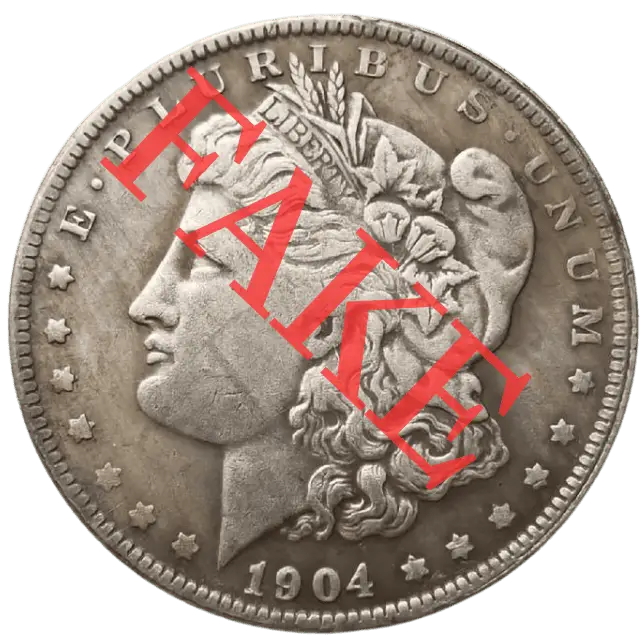
Experienced collectors and dealers can encounter convincing counterfeit Morgan dollars. Some fakes imitate the design well, while others use altered dates or added mintmarks on genuine coins. Authentication therefore needs several kinds of evidence rather than one reassuring test.
Correct silver content is not enough
A standard Morgan dollar was made from 90% silver and 10% copper, with a nominal weight of 26.73 grams. Wear can reduce an authentic coin's weight. A counterfeit can also be made close to the correct weight, or even from silver of a similar fineness.
Matching those measurements does not establish that the coin was struck by the claimed mint in the stated year. Specialists examine design details, date and mintmark characteristics, surfaces and relevant die information alongside physical measurements.
NGC's discussion of an altered 1889-CC Morgan dollar illustrates why the mintmark itself can require close examination. A genuine host coin does not make an added mintmark genuine.
A holder needs verification too
Counterfeit holders can copy the certification number of a real coin. Use PCGS verification or NGC verification, then compare the described issue, grade, holder and available photographs with the actual item.
A successful number lookup alone is not conclusive. Missing online images on an older certification are not conclusive evidence of fraud either. If the comparison raises questions, contact the grading company or an experienced specialist before proceeding.
Evaluate the seller and the transaction
Established auction houses and dealers may offer specialist review and defined authenticity policies. Read the actual terms; no marketplace or business name eliminates every possible error. Peer-to-peer listings require particular attention to seller identity, documentation and available recourse.
For an expensive key date, obtain enough clear images and evidence to justify the purchase. A low price, urgency or refusal to answer basic questions should not be overlooked because a coin appears to be a bargain.
Avoid damaging a coin while testing it
A scale or other appropriate measurement can help, but a magnet, sound test or single instrument result cannot establish authenticity by itself. Avoid scraping, acid testing, dropping coins or removing them from certified holders merely to experiment.
If a Morgan dollar is uncertain, preserve its condition, packaging and purchase records. Contact Atlanta Gold & Coin Buyers for an initial review and guidance about whether more specialized authentication is appropriate.

About the author
Hunter Rhodes
Owner & Managing Director, Atlanta Gold & Coin
Hunter joined Atlanta Gold & Coin in 2022 and purchased the company at the end of 2024. He has been investing in precious metals since 2010, with gold remaining his favorite metal. While he may never admit it, Hunter has a numismatic collector’s side, especially when it comes to select type coins. Libertads and Engelhard rounds are among his favorites.
Meet our team