


 Hunter Rhodes
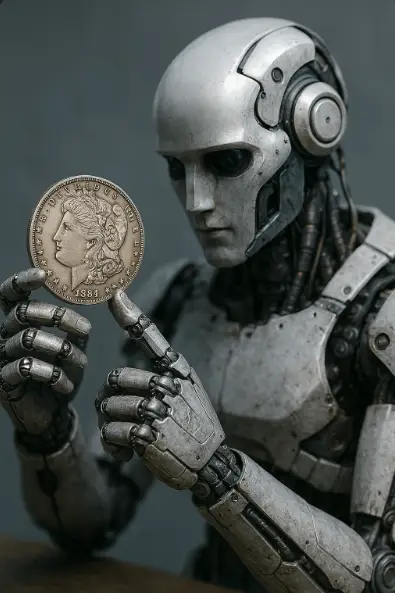
AI can help organize a coin collection, suggest possible identifications and search large amounts of reference information. Its usefulness depends on the task, the quality of the images or measurements and how its results are checked. A confident answer from an app is not automatically an authentication, grade or buying offer.
The sensible question is not whether technology will replace every person in the coin market. It is which decisions a particular tool supports reliably and what evidence is still missing before money changes hands.
Identification is a starting point
A photograph may help identify a denomination, design or approximate date. That can save time when preparing an inventory. Record the proposed identification and check it against the visible details and a reliable reference.
Worn mintmarks, altered dates, unusual varieties and lighting can complicate the match. If an app reports a rare issue, inspect the feature responsible for that conclusion. A high estimated value is a reason to verify the match, not proof that a valuable discovery has been made.
Condition includes more than visible wear
A coin's surfaces, luster, marks, strike and eye appeal all affect its assessment. PCGS describes eye appeal as part of its grading framework. Two examples in the same numerical grade may still attract different bids.
Photographs can conceal fine hairlines or alter the appearance of toning and reflectivity. A prooflike designation concerns characteristics beyond simply appearing bright in one image. Multiple views and controlled lighting may provide evidence that a casual photograph lacks.
These limitations should not be turned into a claim that machines can never evaluate surface features. Capabilities differ, and systems can improve. Evaluate the documented performance of the actual tool instead of making an absolute claim about all AI.
Cleaning and alteration require careful review
Polishing, added mintmarks, altered dates and other surface changes can materially affect value. Some are obvious, while others need specialist examination. A model trained on limited examples may not recognize a new or unusual alteration.
Human examiners can also make mistakes. There is no universal rule that an altered AU coin must trade at a particular lower grade's price. The type and severity of the problem, rarity and buyer demand matter.
Do not clean a coin in an effort to improve a scan. Preserve its surfaces and obtain an appropriate review where the identification or condition could change the decision.
A normal photograph does not measure metal content
An image alone does not directly measure weight, dimensions, conductivity or internal composition. A counterfeit can resemble a genuine coin while using different materials. Conversely, a counterfeit can contain precious metal without being an authentic issue of the claimed mint.
Physical verification uses the appropriate combination of examination and measurements. Instruments have operating requirements and limitations, so one test result should not be stretched beyond what it establishes. A metal-content check is not automatically an authentication of a date, variety or government origin.
Technology can support professional examination
Imaging and databases already assist the industry. The PCGS Gold Shield description includes high-resolution imaging and checks against an image database. That is an example of technology supporting verification, rather than evidence that every phone app offers an equivalent service.
For an automated valuation, ask what prices it uses: listings, completed sales, retail estimates or dealer bids. Check the dates and whether the comparison matches the actual coin. A price estimate is useful only within those limits.
Atlanta Gold & Coin Buyers can review an inventory and discuss the next appropriate verification step. Use AI to make the information easier to organize, while keeping significant authenticity and pricing decisions tied to evidence about the coin itself.

About the author
Hunter Rhodes
Owner & Managing Director, Atlanta Gold & Coin
Hunter joined Atlanta Gold & Coin in 2022 and purchased the company at the end of 2024. He has been investing in precious metals since 2010, with gold remaining his favorite metal. While he may never admit it, Hunter has a numismatic collector’s side, especially when it comes to select type coins. Libertads and Engelhard rounds are among his favorites.
Meet our team