


 Hunter Rhodes
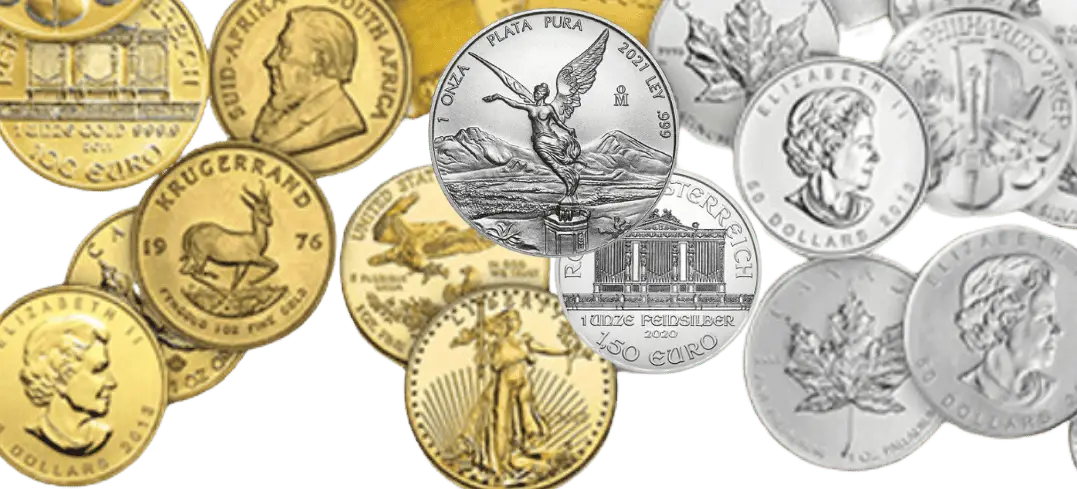
Precious-metals terminology becomes much easier when you separate the market price from the product being offered. “Spot,” “coin” and “bullion” answer different questions. Knowing what each term means helps you compare quotes without confusing a metal's value with a finished item's selling price.
Spot is a market reference
The spot price is a reference for metal traded for near-term delivery, commonly quoted in U.S. dollars per troy ounce. A quote should identify the metal, currency, unit and time. Bid and ask quotations can differ, as can data providers and the timing of displayed prices.
Spot is not the amount every dealer must charge or pay for every physical product. A finished coin or bar has fabrication, distribution and handling costs. Product demand, inventory and transaction terms influence the premium above or discount to a reference price.
A published benchmark is also different from a continuously changing quotation. For example, the LBMA gold and silver prices are established through scheduled benchmark auctions. Verify what a website is displaying before comparing it with a dealer's live quote.
When evaluating an offer, ask for the complete dollar amount and the time for which it is valid. A percentage or “over spot” statement is meaningful only when the underlying reference and included charges are clear.
A coin is an issued monetary product
In ordinary bullion-market usage, a coin is a government-issued monetary product. Its face value or legal-tender status is distinct from its market value. A precious-metal coin can trade for much more than its denomination because buyers value its metal, collectibility or both.
Not every coin displays a numerical denomination in the same way. Do not use the presence of a familiar dollar amount as the only authenticity or classification test. Consult the issuing authority's specifications for the exact product.
A privately made round can look similar to a coin but generally has no government-issued legal-tender denomination. That does not make an authentic round worthless or counterfeit. It simply describes a different product whose metal content, maker and resale market need to be evaluated.
Mint ownership also requires care. A commercial-looking mint name does not prove private ownership. The Perth Mint is owned by the Government of Western Australia.
Bullion includes coins, bars and rounds
Bullion generally refers to precious metal held or traded primarily for its metal content. It can take the form of government-issued bullion coins, private rounds or bars. Bullion is not a category reserved exclusively for privately minted products.
The boundary with collecting is not absolute. Some bullion issues develop collectible premiums, while common historic coins can trade primarily for their metal. Ask what portion of an item's price depends on metal content and what portion depends on a particular date, finish, grade or limited issue.
Purity describes the proportion of precious metal in the product. A fineness of .999 means 99.9%, while .9999 means 99.99%. These figures are close but not identical. A marketing description such as “pure gold” should not replace the actual specification.
Distinguish gross weight from fine-metal weight
One troy ounce equals approximately 31.1035 grams. Gross weight includes the entire item; fine-metal weight counts only the specified precious metal. When starting with gross grams, divide by grams per troy ounce and multiply by fineness to calculate approximate fine troy ounces.
Do not apply the purity adjustment twice. If an alloyed coin is specified to contain one fine troy ounce of gold, that figure already states its gold content; its total weight will be greater. Likewise, a historic silver dollar is not automatically a one-ounce silver product.
Use the exact issue's specifications, then compare total purchase prices and current resale indications on the same fine-metal basis. Atlanta Gold & Coin Buyers can help make those comparisons. Contact us with the product, quantity and questions you would like to review.

About the author
Hunter Rhodes
Owner & Managing Director, Atlanta Gold & Coin
Hunter joined Atlanta Gold & Coin in 2022 and purchased the company at the end of 2024. He has been investing in precious metals since 2010, with gold remaining his favorite metal. While he may never admit it, Hunter has a numismatic collector’s side, especially when it comes to select type coins. Libertads and Engelhard rounds are among his favorites.
Meet our team