


 Hunter Rhodes
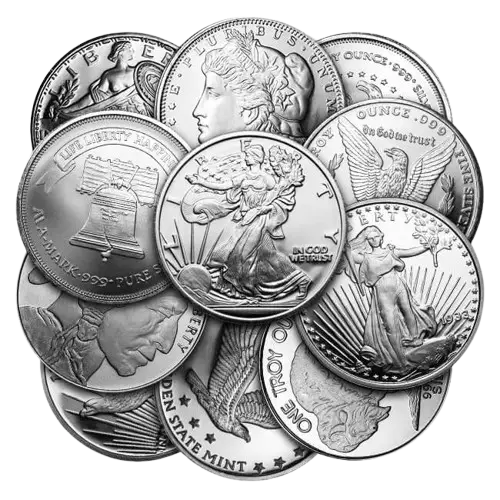
Silver buyers often compare daily price changes, coin dates, certificates and designs. All four can matter, but their importance depends on the purpose of the purchase. A collector seeking a particular issue has different priorities from someone comparing the cost of a given amount of silver.
The aim is to make those preferences explicit. Separate the features you personally enjoy from costs you expect to recover when selling. That makes it easier to choose a suitable product without assuming that every attractive feature adds resale value.
1. Put short-term price changes in dollar context
A small move per ounce can become significant on a large order. Multiply the change by the quantity before deciding whether it is material to your budget. At a hypothetical 500-ounce purchase size, a $1-per-ounce difference changes the metal-related cost by $500 before any premium changes.
That does not mean every movement should cause a change of plan. If you have a defined budget and long holding period, a consistent purchasing approach may be easier to follow than reacting to every headline. But affordability remains relevant, even when you expect the metal to rise.
No forecast that silver will double or triple makes today's price irrelevant. The forecast could be wrong, the holding period could change or an unexpected expense could require an earlier sale. Decide how much you can commit without relying on a particular future price.
Also compare complete offers. A slightly lower spot reference may be offset by a higher product premium, payment fee or shipping charge. Ask what the order will actually cost and how long the quote is valid.
2. Decide whether a particular date is part of the goal
A birth year or anniversary date can make a coin more enjoyable to own. A collector building a series may reasonably seek specific dates and conditions. These preferences are valid, provided the added cost is understood.
For metal accumulation, mixed-date bullion may offer a useful alternative to a particular year. Compare the exact products and current premiums. Do not assume all dates always sell for the same amount: some issues, finishes or varieties have distinct collector demand.
An older date alone does not establish rarity. Mintage, surviving supply, condition and buyer interest all affect collectibility. A low original mintage also does not guarantee a profitable resale premium.
Ask for a current buying indication for both the preferred issue and the lower-premium alternative. That comparison shows how much of the extra purchase cost is presently recognized by buyers, although future demand can change.
3. Understand what certificates and sealed packaging establish
Many ordinary bullion coins are distributed in bulk without an individual certificate of authenticity. Proof and commemorative products more often include presentation materials. Check the original format for the specific issue instead of assuming that every genuine coin must come with a separate certificate.
A paper certificate, assay card, mint strap or sticker is not conclusive authentication. Packaging and documents can be copied or altered. Conversely, an opened tube or missing box does not automatically mean the metal is false.
Choose a seller whose identity and transaction terms you can verify. Ask how the items are authenticated, what the invoice will identify and how a concern about authenticity would be handled. An established reputation is useful context, but no reputation replaces appropriate verification.
Third-party grading is another distinct service. A certification number should be checked against the grading company's records and the actual coin and holder. PCGS cautions that valid certification numbers can be copied. A successful lookup alone does not prove that the item in hand is genuine.
4. Compare round designs without overlooking the actual product
A private silver round can borrow a familiar historic design without becoming a U.S. government coin. Buffalo-style rounds are a common example. Look for the maker, stated weight and fineness, and verify the item rather than relying only on its image.
The U.S. Mint's 2001 American Buffalo silver dollar is a separate commemorative issue. It should not be confused with a private one-ounce buffalo round. Similar imagery does not imply identical metal content, denomination or market.
For common bullion rounds, design differences may have little effect on a particular dealer's current bid. That is a market observation to confirm, not a universal rule. Certain makers, discontinued products or collectible designs can have their own following.
Condition can also matter. A previously owned round is not automatically damaged or inferior: “secondary market” simply indicates resale. Heavy wear, damage or a difficult-to-market theme can affect the quote, while ordinary toning does not change the amount of silver in the item.
Bring the comparison back to cost and resale
Write down the fine-silver amount, complete purchase price and current resale indication for each option. Add any premium you are willing to pay purely for collecting enjoyment. Keep enough flexibility that a favorite design or date does not lead you beyond your budget.
Atlanta Gold & Coin Buyers can help compare available products and current buying terms. Contact us with your intended quantity and preferences so the discussion focuses on the choices that matter to you.

About the author
Hunter Rhodes
Owner & Managing Director, Atlanta Gold & Coin
Hunter joined Atlanta Gold & Coin in 2022 and purchased the company at the end of 2024. He has been investing in precious metals since 2010, with gold remaining his favorite metal. While he may never admit it, Hunter has a numismatic collector’s side, especially when it comes to select type coins. Libertads and Engelhard rounds are among his favorites.
Meet our team