


 Hunter Rhodes
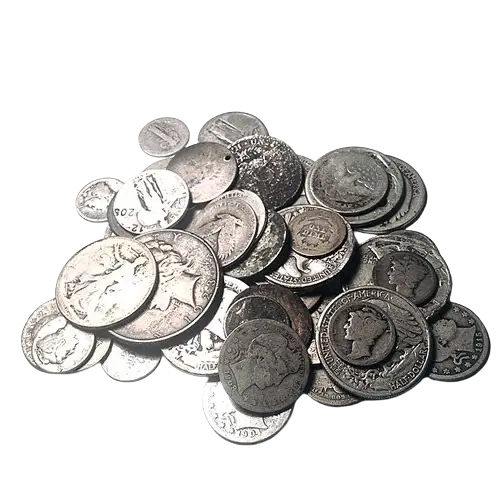
Heavily worn silver coins can contain less metal than their face-value pricing convention assumes. Weighing a group can help you understand that difference, but buying by weight is not automatically cheaper. The useful comparison is the total price per fine troy ounce of silver.
Start with the correct specification
Common twentieth-century U.S. 90% silver dimes, quarters and halves had nominal gross weights of 2.50, 6.25 and 12.50 grams respectively. These figures should not be applied indiscriminately to every older U.S. coin or to 35% nickels, 40% halves and silver dollars.
Circulation can remove metal. A coin described as a cull may also have damage or other problems; the word does not establish a uniform amount of weight loss. Inspect and weigh the actual group rather than assigning every cull the same deduction.
Understand the face-value convention
A common trade convention for circulated 90% dimes, quarters and halves uses approximately .715 fine troy ounce per $1 face value. It allows for ordinary circulation wear. Full nominal weight would correspond to approximately .7234 fine ounce per $1 face value.
Neither figure is a guarantee of the silver in every heavily worn bag. If the group includes many slick or damaged coins, actual weight may provide a more useful basis, after composition and authenticity have been established.
Compare a worked example
Consider two hypothetical groups of 400 quarters, each totaling $100 face value and offered at $2,700. Assume each group is genuine 90% silver and the listed weight excludes containers. Fine silver equals gross grams multiplied by .90, divided by 31.1034768.
| Example group | Gross grams | Fine troy ounces | Price per fine ounce |
|---|---|---|---|
| Nominal full-weight illustration | 2,500 | 72.3392 | $37.32 |
| Worn example averaging 5.90 g per coin | 2,360 | 68.2882 | $39.54 |
The worn group contains less silver for the same purchase price. These are arithmetic examples, not current offers or a claim that every circulated quarter weighs 5.90 grams.
Check the terms of a weight-based quote
Confirm whether the unit is grams, gross troy ounces or fine troy ounces, and whether the fineness adjustment is already included. Do not multiply by .90 twice. Exclude bags and holders from the net coin weight.
A lower face-value price can compensate for wear, just as a high weight-based premium can erase an apparent advantage. Compare the complete cost on the same basis and ask how the group would be valued at resale.
Separate potentially collectible dates before treating an entire group only as bullion. Atlanta Gold & Coin Buyers can help identify the coins and explain the weight or face-value basis used in a quote.

About the author
Hunter Rhodes
Owner & Managing Director, Atlanta Gold & Coin
Hunter joined Atlanta Gold & Coin in 2022 and purchased the company at the end of 2024. He has been investing in precious metals since 2010, with gold remaining his favorite metal. While he may never admit it, Hunter has a numismatic collector’s side, especially when it comes to select type coins. Libertads and Engelhard rounds are among his favorites.
Meet our team