
Silver’s Sudden Surge: What Is Driving Precious Metals Right Now?
A Market Update From Atlanta Gold & Coin
Silver has made another sharp move higher, and this time the speed of the move is getting people’s attention.
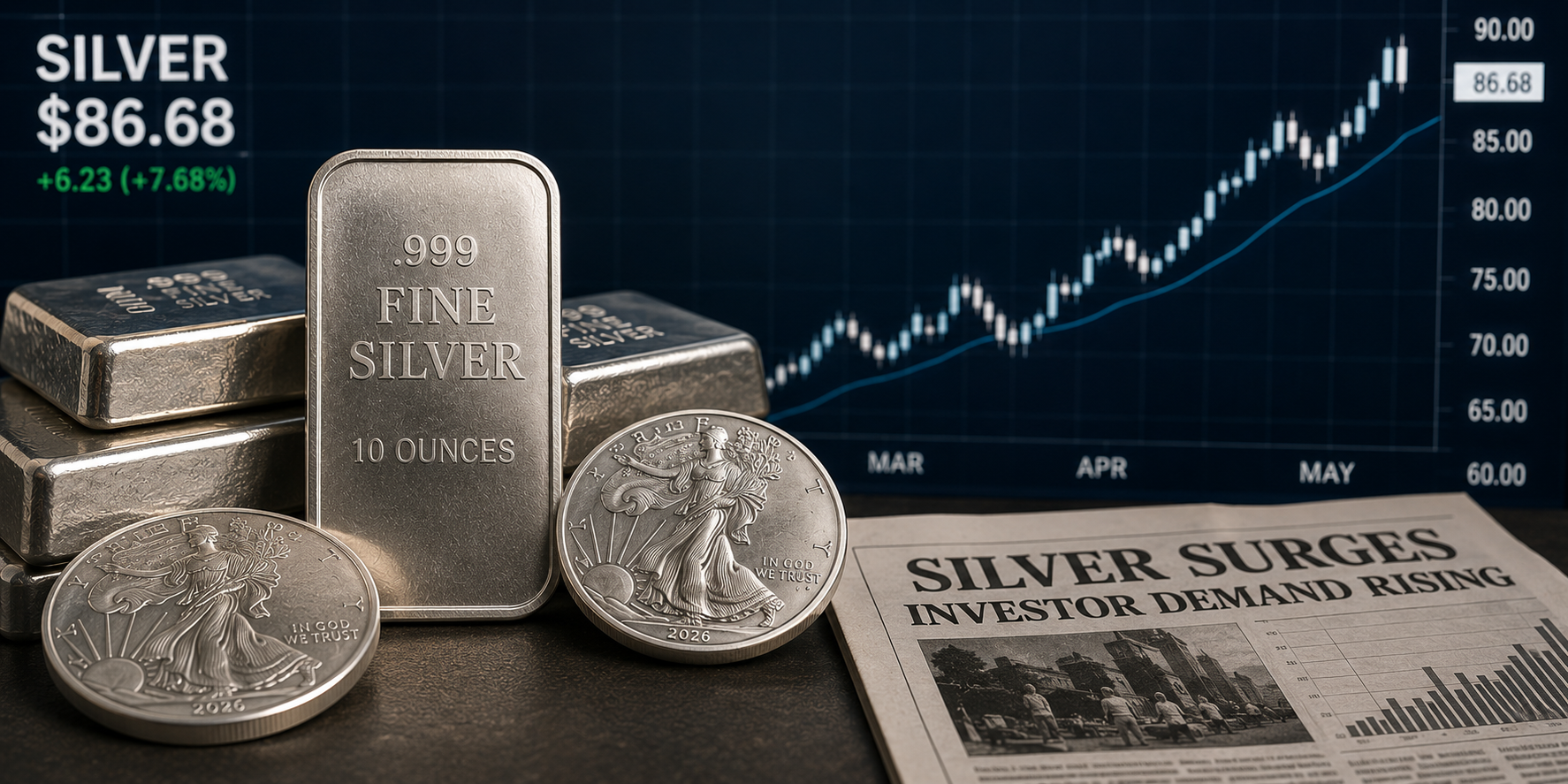
As of Tuesday, May 12, 2026, silver was trading around the mid-to-high $80s per ounce, with APMEX showing silver at $87.47 per ounce around 4:03 p.m. ET, while Trading Economics showed silver near $86.68 per ounce the same day. That puts silver up roughly 14% to 15% over the past month, depending on the data source used. Gold, meanwhile, remains historically elevated, trading around the high $4,600s to low $4,700s per ounce after pulling back from earlier 2026 highs.
For anyone who follows precious metals closely, the question is not simply, “Why did silver go up?” The better question is:
Why did silver move so quickly, and is this a short-term reaction or part of a larger trend?
The honest answer is that silver’s latest run appears to be the result of several forces hitting the market at the same time. There may not be one clean smoking gun. Markets rarely hand us a neat little envelope labeled “reason.” More often, they throw five lit matches into the same room and let everyone argue about which one started the fire.
Right now, those matches appear to be:
1. Escalating U.S.-Iran uncertainty
2. Oil and inflation concerns
3. Federal Reserve rate uncertainty
4. A tight physical silver market
5. Technical buying after silver broke key levels
6. Growing investor demand for tangible assets
Silver’s move over the last two trading days looks like a short-term acceleration inside a much larger precious metals story.
What Happened Over the Last Two Days?
Silver’s move was sharp enough that it deserves attention even from investors who do not normally follow day-to-day metals charts.
On Monday, May 11, silver reportedly jumped around 7%, reaching approximately $85.50 per ounce, its highest level in nearly two months. The move came as investors reacted to stalled U.S.-Iran negotiations, rising geopolitical risk in the Middle East, and inflation concerns tied to higher oil prices.
By Tuesday, May 12, silver cooled slightly but remained near elevated levels. That pullback does not erase the significance of the move. A market that can rise 6% to 7% in one session and then hold much of that gain is sending a message: buyers are active, and sellers are not fully in control.
This is not the first time we have seen silver accelerate after lagging gold. We covered that dynamic in detail in The Price of Gold Leads, But Silver Stampedes in a Bull Market. Silver has a long history of sleeping through the early part of a precious metals cycle, then waking up like it heard the dinner bell.
The Iran Situation: Why It Matters for Precious Metals
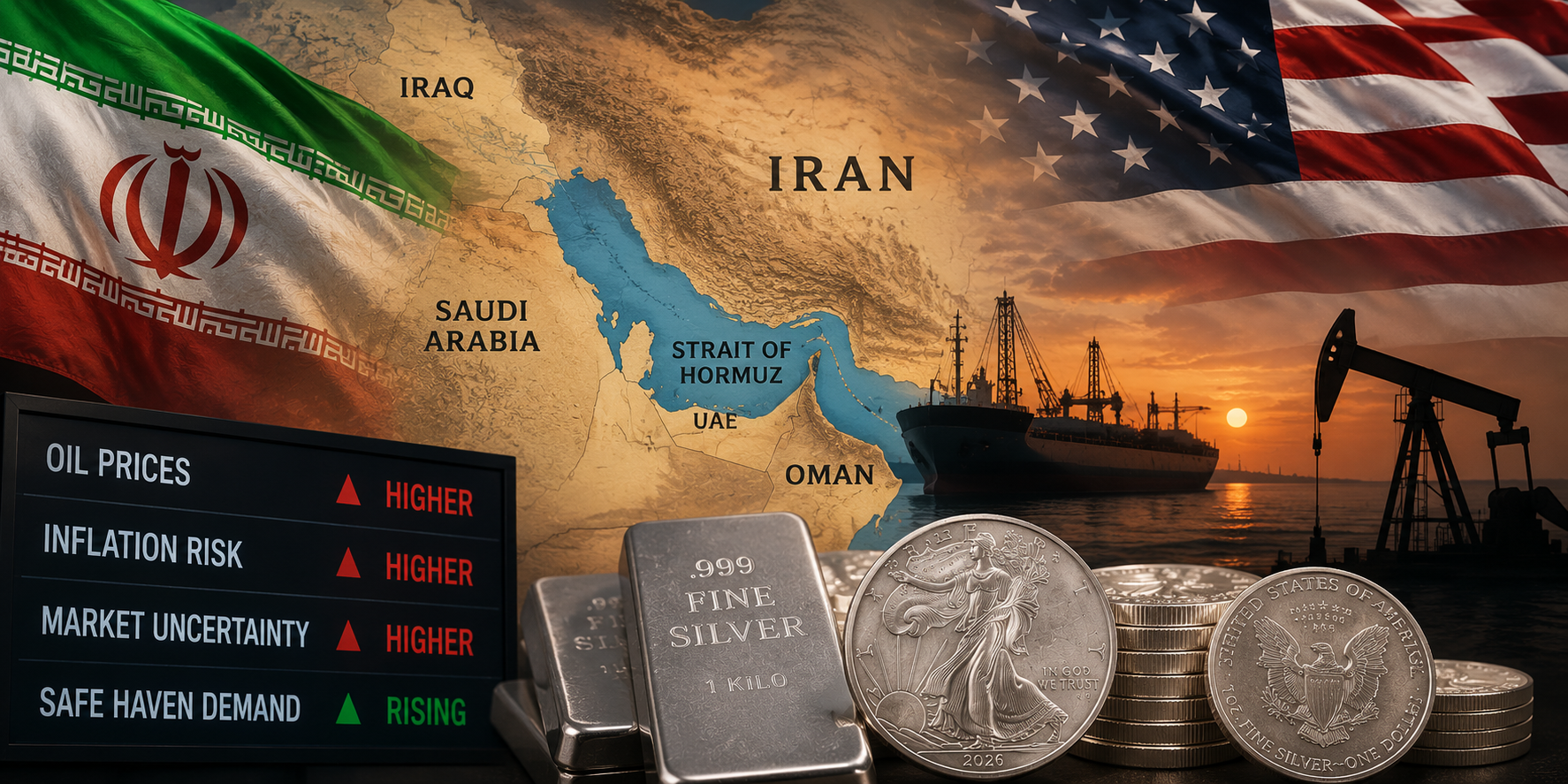
The U.S.-Iran situation appears to be one of the clearest short-term catalysts behind the move.
This matters for precious metals because Iran is not just a geopolitical headline. It connects directly to oil, inflation, shipping, and investor psychology.
A major concern has been the Strait of Hormuz, one of the most important energy shipping lanes in the world. Conflict-related disruptions or even the threat of disruption can keep oil prices elevated and add pressure to inflation expectations.
When oil rises sharply, markets start to worry about inflation. When inflation rises, investors start asking whether the Federal Reserve can cut rates at all. When rate cuts become less likely, gold and silver can react in conflicting ways.
That is why this market is complicated.
Normally, geopolitical conflict can support precious metals because gold and silver are viewed as safe-haven assets. But if the same conflict drives oil prices higher and inflation hotter, that may pressure precious metals through the interest-rate channel. Higher expected interest rates can make non-yielding assets like gold and silver less attractive, at least in the short term.
So the Iran situation has had a dual effect:
It has increased safe-haven demand.
It has also increased inflation and interest-rate uncertainty.
For gold, that second force has recently created pressure. For silver, the first force, combined with tight supply and industrial demand, appears to have won the short-term tug-of-war.
We covered the broader geopolitical angle in How U.S. Involvement in Israel-Iran War Could Impact Gold Prices. The short version is that Middle East instability does not just affect gold and silver through fear. It affects them through oil, inflation, shipping, and confidence in the broader financial system.
The Federal Government Factor: Inflation, Rates, and Policy Uncertainty
The federal government angle is important, but it needs to be separated into a few different pieces.
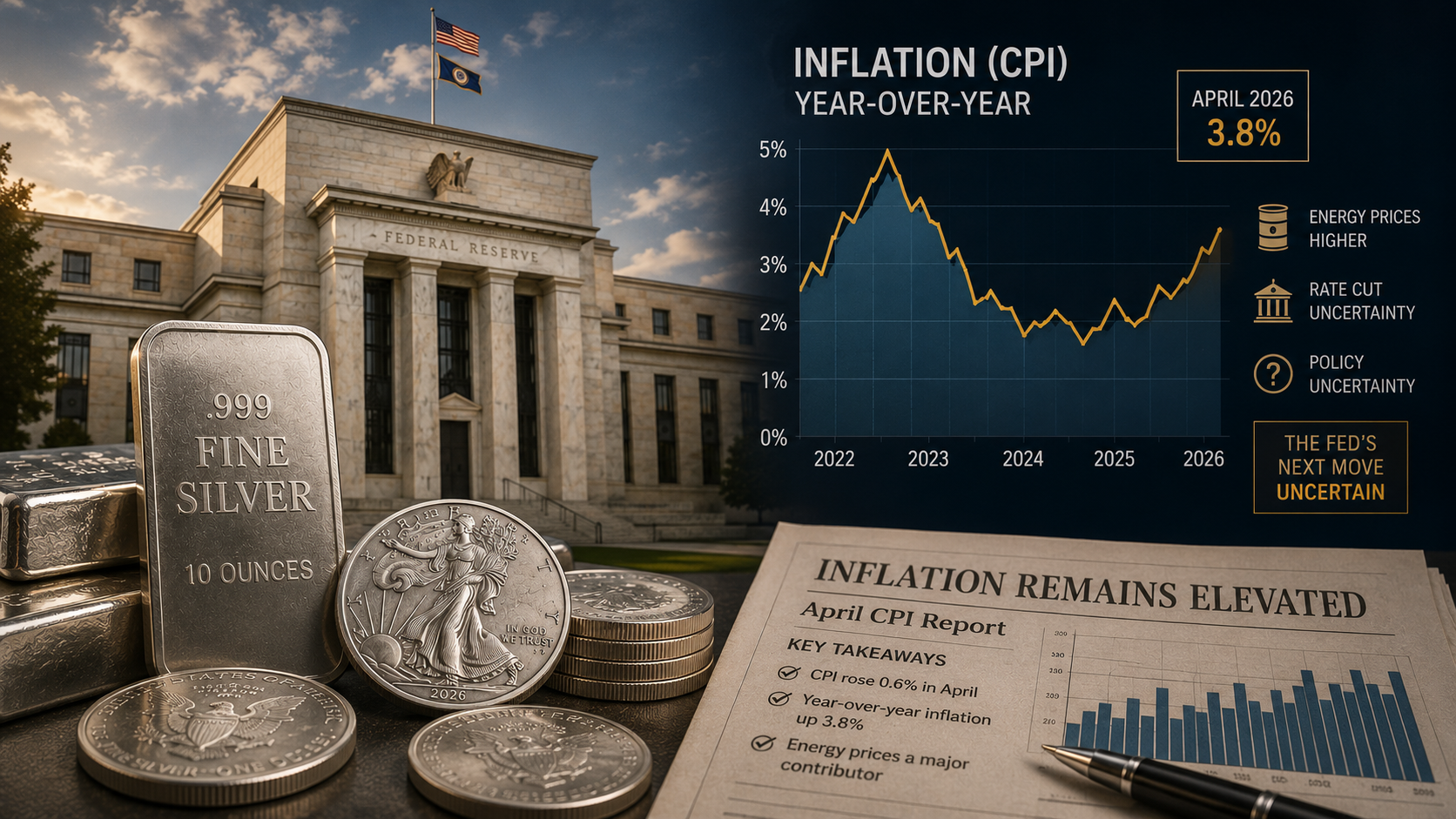
First, inflation matters. When energy prices rise, that can feed directly into the cost of transportation, food, manufacturing, and consumer goods. Even if the Federal Reserve wants to cut rates, sticky inflation makes that harder.
That inflation data matters because precious metals are deeply tied to real interest rates, the dollar, and confidence in government monetary policy.
Second, the Federal Reserve is in a difficult position. Markets now have to process whether the Fed is more likely to hold rates steady for longer, delay cuts, or even consider tighter policy if inflation keeps running hot.
Higher rates can pressure gold and silver because metals do not pay interest. But if inflation rises faster than yields, real rates can remain unattractive, which can still support precious metals.
Third, there is broader federal policy uncertainty. The Silver Institute has pointed to U.S. policy uncertainty and concerns around Federal Reserve independence as part of the supportive backdrop for silver prices in 2026.
That is not a small point. Precious metals do not only move because of coin collectors, jewelry demand, or industrial use. They also move when people lose confidence in the stability or predictability of financial policy.
When investors see:
elevated federal deficits,
political pressure around interest rates,
inflation reaccelerating,
geopolitical conflict,
and a central bank trapped between inflation and growth concerns,
they tend to look harder at hard assets.
Gold usually gets the first wave of attention. Silver often follows later and moves faster.
That may be what we are seeing now.
We discussed this same Federal Reserve problem in The Fed Just Showed Its Hand: What It Means for Gold & Silver Investors. The central issue is that the Fed is boxed in. Cut too soon, and inflation may reignite. Hold too long, and the economy may weaken. Neither path is especially clean.
Why Silver Is Moving Faster Than Gold
Silver often behaves like gold’s more volatile younger brother. It can lag for a while, then move violently once buyers finally show up.
There are several reasons for that.
Gold is primarily a monetary metal. It is owned heavily by central banks, long-term investors, funds, and private holders looking for wealth preservation. Silver is both a monetary metal and an industrial metal. That makes silver more sensitive to economic expectations, manufacturing demand, investor speculation, and physical supply constraints.
The silver market is also structurally tight. The market has been dealing with repeated deficits, and continued reliance on above-ground inventories can add pressure when fresh investment demand suddenly appears.
That matters because when a market is already tight, it does not take much new demand to push prices higher.
Silver also has expanding industrial demand tied to:
electronics,
artificial intelligence infrastructure,
data centers,
automotive technology,
solar and renewable energy,
electrical contacts and components.
This is the key distinction:
Gold is being pulled by monetary fear. Silver is being pulled by monetary fear plus industrial scarcity.
That combination can create much sharper moves.
We covered the silver-specific setup recently in Silver at $70: The Asymmetric Setup, the Sixth Straight Deficit, and Why $300 Targets Are Now in Play. That article focused on the same core idea: silver does not need a perfect market environment to move. It only needs capital to notice that supply is tight, demand is durable, and the market is small enough for flows to matter.
Was There One Specific Cause Behind the Run-Up?
The cleanest answer is: no single cause explains the entire move.
But if we had to rank the likely causes, the short-term trigger appears to be:
1. Stalled U.S.-Iran Peace Talks and Middle East Risk
The immediate two-day jump lines up closely with renewed concern that the U.S.-Iran conflict could continue or escalate. Reports specifically tied silver’s Monday surge to stalled negotiations, threats to the ceasefire, and elevated risks in the Middle East.
2. Oil-Driven Inflation Fear
Higher oil prices feed directly into inflation expectations. If energy stays elevated, the market has to reprice the path of inflation, interest rates, and economic growth.
3. Federal Reserve Uncertainty
Hotter inflation makes it harder for the Fed to cut rates. That creates tension in metals. Higher rates are normally a headwind, but inflation and policy uncertainty can still push investors toward tangible stores of value.
4. Tight Silver Fundamentals
Silver’s structural deficit is not new, but it becomes more important when investor demand suddenly increases. A tight physical market can turn what would have been a normal rally into a much faster move.
5. Technical Breakout Buying
Once silver broke higher, momentum traders likely joined the move. This is common in silver. Once a key level gives way, the market can move faster than fundamentals alone would suggest. That does not mean the move is fake. It means the move may be amplified.
So the most practical explanation is this:
The Iran situation likely lit the fuse, inflation and Fed uncertainty added fuel, and silver’s tight physical market made the move more explosive.
Why Gold Has Not Moved the Same Way
Some clients may ask: if geopolitical risk is rising, why has gold not exploded higher at the same pace?
That is a fair question.
Gold has remained historically strong, but it has also faced pressure from rising yields, a firmer dollar, and the idea that the Fed may not be able to cut rates soon.
This is one of those moments where gold is doing exactly what gold does over long periods, but not necessarily what people expect over 48 hours.
Gold is not just a panic button. It is also affected by:
the U.S. dollar,
Treasury yields,
real interest rates,
central bank buying,
physical demand from India and China,
fund flows,
and liquidity needs.
Silver, meanwhile, has more room to catch up when investor attention turns toward the entire precious metals complex.
This helps explain why silver can outperform gold in certain phases of a bull market. Historically, silver often lags early in a precious metals move, then accelerates later as retail and speculative demand broaden.
That appears to be happening again.
For a broader look at the year’s setup, see Gold Price and the Macro Map for the Rest of 2026. The bigger picture has not changed: geopolitics, deficits, inflation, reserve diversification, and central bank policy are still doing the heavy lifting.
The Physical Market: What We Are Watching Locally
At Atlanta Gold & Coin, we pay attention to the paper price of gold and silver, but we also pay close attention to the physical market.
Spot price tells one story. Physical availability tells another.
In a fast-moving silver market, several things can happen quickly:
wholesalers adjust bids and asks more often,
premiums can widen,
popular products may disappear from inventory,
buy/sell spreads may temporarily expand,
customers who were waiting may suddenly become buyers,
sellers may come in to take advantage of higher prices.
Silver Eagles, silver rounds, 90% silver coins, 10 oz bars, 100 oz bars, and kilo bars can all react differently. The spot chart does not always tell you what is happening in actual retail inventory.
This is especially true when the move is sudden. Dealers have to account for replacement cost. If silver jumps several dollars in a day, a dealer selling too cheaply may not be able to replace inventory at the same level. That is why premiums and bid/ask spreads sometimes move during volatile periods.
For clients, this means it is important to look at both:
1. Spot price
2. Real-world product availability and premiums
Spot price is the headline. The physical market is where the transaction actually happens.
We discussed the broader drivers of metals pricing in These Five Factors Affect the Price of Gold and Silver. The physical market is where those factors eventually show up in real life: premiums, spreads, inventory, and customer behavior.
What Could Happen Next?
There are several realistic paths from here.
Scenario 1: Silver Consolidates After the Spike
This would be normal. After a 6% to 7% one-day move, silver could pull back or trade sideways while the market digests the move.
That does not necessarily mean the rally is over. It may simply mean the market needs to reset. Silver is volatile. It does not walk politely up the stairs. It tends to sprint, trip, recover, and sprint again.
Scenario 2: Silver Pushes Higher If Iran Risk Escalates
If U.S.-Iran tensions worsen, oil rises further, or the Strait of Hormuz remains disrupted, inflation fears may intensify. That could support additional precious metals demand, especially if investors begin to worry about policy mistakes or stagflation.
In that environment, silver could continue to outperform because it has both safe-haven and industrial-demand narratives working in its favor.
Scenario 3: A Peace Deal or De-Escalation Cools the Rally
If there is a credible diplomatic breakthrough with Iran, oil could ease, inflation expectations may cool, and some short-term safe-haven demand could leave the metals market.
That would likely create a pullback, especially after such a fast move.
However, de-escalation would not automatically erase silver’s structural supply deficit. It would remove one short-term catalyst, not necessarily the entire long-term case.
Scenario 4: The Fed Becomes the Main Driver
If inflation stays hot, the Fed may remain cautious. If markets begin pricing in no rate cuts or even possible rate hikes, metals could face pressure from higher yields. But if investors decide the Fed is falling behind inflation, metals could benefit from declining confidence in paper purchasing power.
This is the awkward part of the cycle: the same inflation data can be interpreted both ways.
That is why we expect volatility to remain elevated.
What Should Buyers and Sellers Do?
For buyers, this is not a market that rewards emotional decisions. Chasing a vertical move can be dangerous. So can waiting forever for a perfect pullback that may never come.
A better approach is to separate your reason for owning precious metals.
If you are buying as a long-term hedge, then short-term volatility matters less. Dollar-cost averaging may make more sense than trying to perfectly time every dip.
If you are buying for a short-term trade, you need to understand that silver can move against you quickly. This is not a sleepy market.
If you already own silver and are considering selling, higher prices may create an opportunity to rebalance, especially if silver has become too large a percentage of your holdings. Some investors may choose to trade part of a silver position into gold if the gold-to-silver ratio becomes attractive for their goals.
For sellers, the key is simple: know what you have. Generic silver, 90% silver coins, Silver Eagles, proof coins, collectible silver, and modern mint products do not all trade the same way. Melt value is one thing. Market value is another.
Our View
The current precious metals market is being driven by a rare combination of macro uncertainty, geopolitical risk, inflation pressure, tight physical supply, and renewed investor interest.
Silver’s sharp move over the last two days appears most directly tied to U.S.-Iran uncertainty and the inflationary impact of higher oil prices. But the reason silver moved so aggressively is that the market was already sitting on stronger fundamentals: repeated deficits, tight physical availability, and renewed demand for hard assets.
In other words, Iran may have been the spark. It was not the whole pile of wood.
We would not be surprised to see silver remain volatile in the near term. Pullbacks are possible, even likely. But the broader backdrop for precious metals remains supportive as long as inflation stays elevated, federal policy remains uncertain, and investors continue looking for assets outside the traditional paper system.
As always, the right decision depends on what you own, your time horizon, and whether you are buying for preservation, speculation, income planning, estate purposes, or portfolio balance.
Atlanta Gold & Coin helps clients evaluate gold, silver, platinum, and palladium coins and bullion based on real market pricing, transparent buy rates, and current physical demand.
If you are considering buying or selling precious metals, request an appointment with Atlanta Gold & Coin to review your options in today’s market. You can also review our current public buy rates on our What We Pay page.
The views in this post are general market commentary and not personalized investment advice. Atlanta Gold and Coin is a precious metals dealer, not a registered investment advisor. Consult your CPA, tax professional, or financial advisor for guidance specific to your situation.
